

Sugar in Sports Drinks: A 2026 Comparison of A-GAME vs. Gatorade & Powerade
You might want to think twice before grabbing a sports drink or regret it later
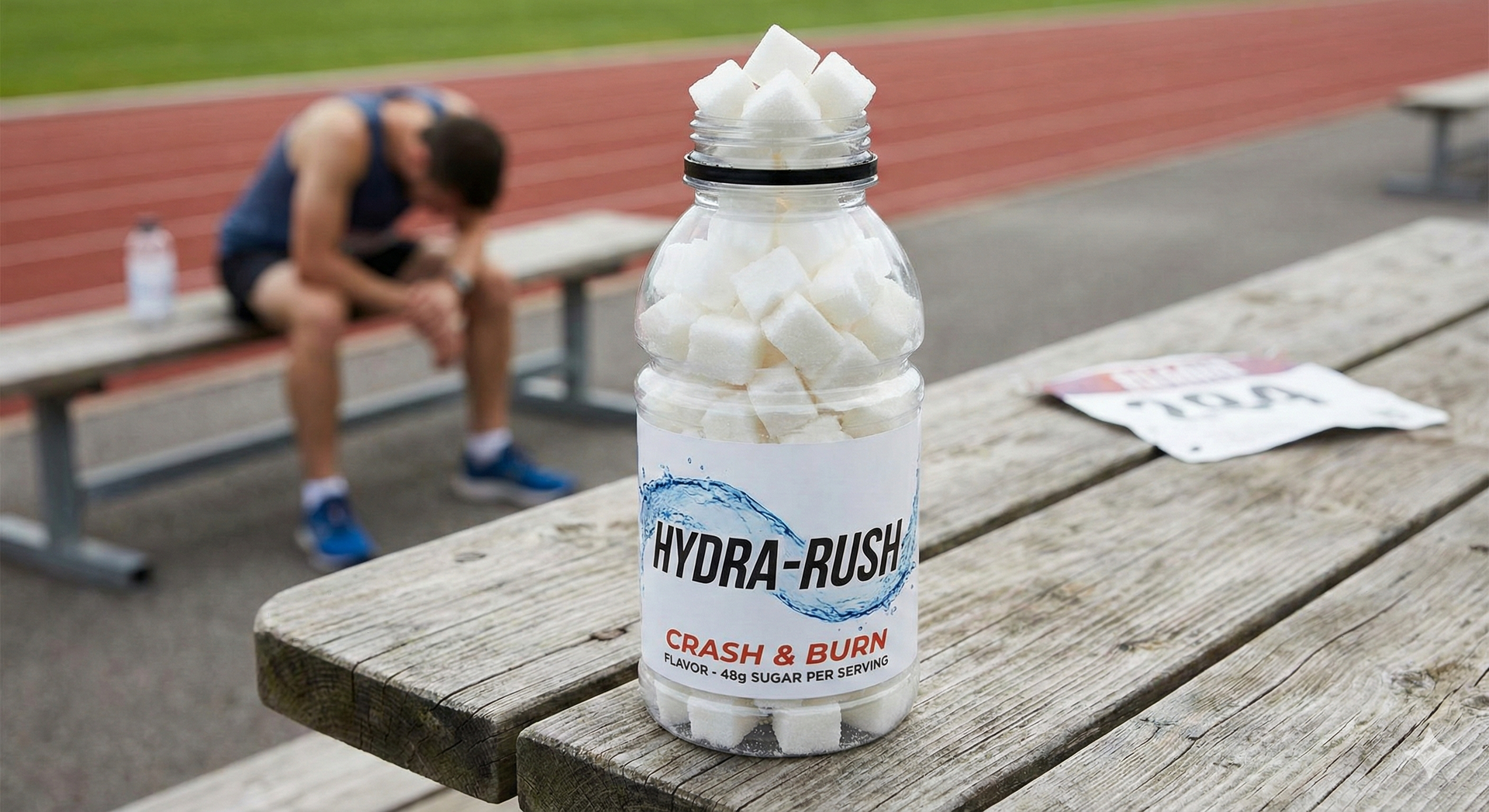
If you’ve ever grabbed a sports drink after practice or a workout, you’ve probably wondered: how much sugar is in this bottle?
With so many options on the shelf, it’s tough to know which drinks support performance and which ones quietly stack up added sugars.
This guide breaks sugar down, then compares A-GAME, Gatorade, and Powerade (plus a few popular alternates) using a standardized per 12 fl oz view so it’s easy to compare.
Let's define what counts as 'sugar' in your sports drink
On a Nutrition Facts label, “Total Sugars” includes naturally occurring sugars plus any sugars that were added.
When a label also lists “Added Sugars,” that number tells you how much sugar was added during manufacturing.
Most classic sports drinks get their sweetness from sucrose (table sugar), dextrose (glucose), or blends of fast-digesting carbs.
“Zero sugar” sports drinks use non-sugar sweeteners (like sucralose, acesulfame potassium, stevia, or sugar alcohols) to keep sweetness without the sugar grams.
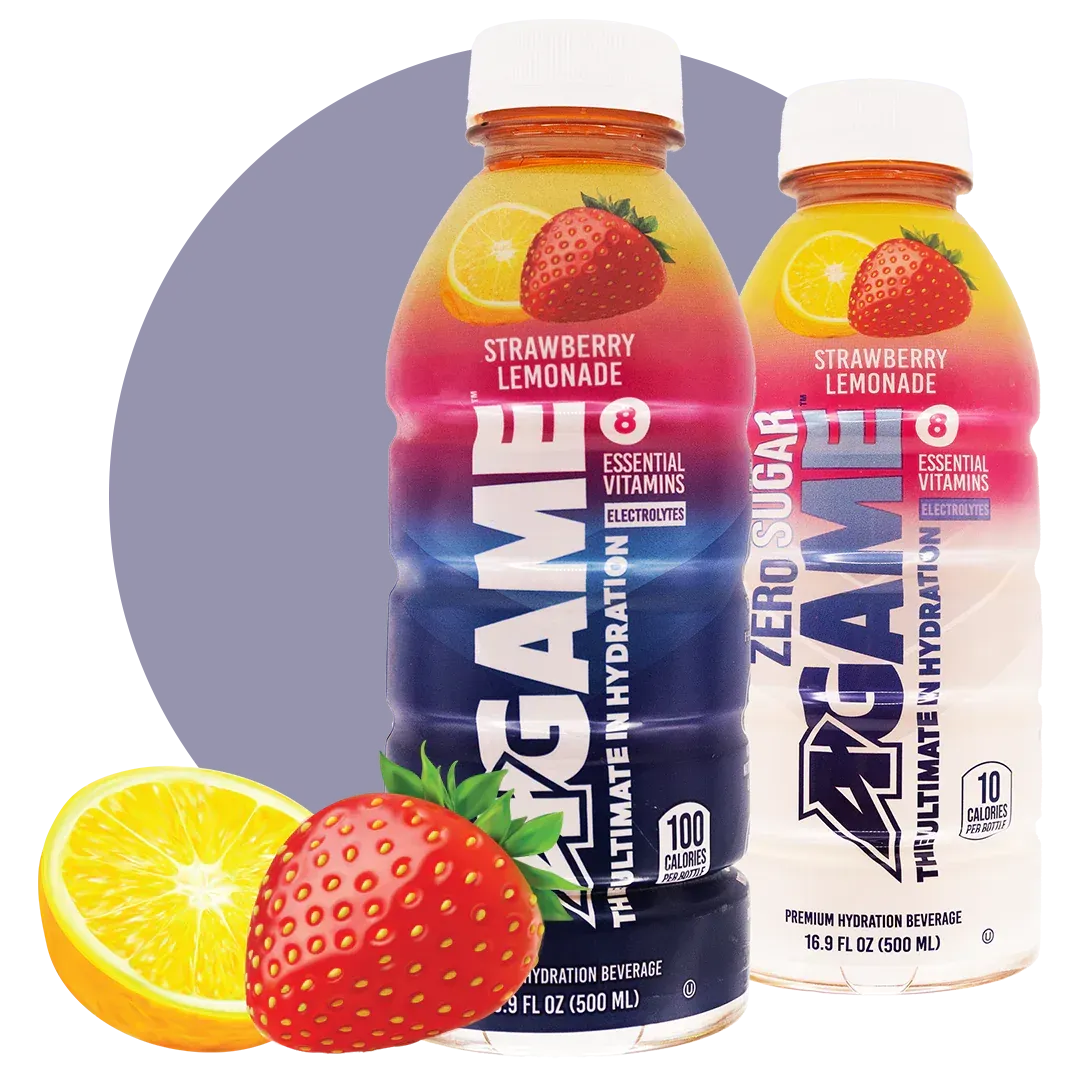
Where A-GAME fits in: A-GAME has more than one lane.
A-GAME Zero Sugar is built for people who want electrolytes and flavor with 0 g sugar, while A-GAME’s original style bottles can contain meaningful sugars depending on the specific product and retailer listing. Always confirm on the exact label for the bottle you’re buying.
Why does sugar matter for hydration and performance?
Sugar in sports drinks is not automatically “bad.”
During longer or harder sessions, carbs can help performance because your muscles and brain use glucose as fuel. In that context, sugar is doing a job: energy delivery.
The tradeoff is that many people drink sports drinks outside of long, intense workouts (think: commuting, casual errands, short lifts). In those moments, high sugar can be a lot of extra calories for not much benefit.
It can also be a problem for athletes and parents who are trying to reduce daily sugar intake, avoid energy crashes, or protect dental health.
That’s why the “best” sugar level depends on your use-case:
- Training and competition fuel: carbs can help when the session is long or demanding.
- Everyday hydration: lower sugar often makes more sense.
- Sensitive stomachs: super-sweet drinks can feel heavy, especially in heat.
For a simple reference point: the American Heart Association commonly cited guidance is to limit added sugars to about 25 g/day for women and 36 g/day for men.
How much sugar is in the most popular sports drinks?
Important note: formulas and serving sizes vary by flavor and bottle. To keep this fair and easy, the chart below shows a standardized “per 12 fl oz” comparison based on commonly listed label values from major product pages and label databases.
Sports drink sugar comparison (standardized to 12 fl oz)
Color key: 🟩 low sugar | 🟨 moderate | 🟥 high
A-GAME Zero Sugar (example flavor)
- Bottle size used: 16.9 oz
- Total sugar per bottle: 0 g
- Sugar per 12 fl oz: 0 g
- Sugar level: 🟩 Low
A-GAME Original (example listing)
- Bottle size used: 16 oz
- Total sugar per bottle: 21 g
- Sugar per 12 fl oz: 15.8 g
- Sugar level: 🟥 High
Gatorade Thirst Quencher (classic)
- Bottle size used: 12 oz
- Total sugar per bottle: 21 g
- Sugar per 12 fl oz: 21 g
- Sugar level: 🟥 High
Powerade (classic)
- Bottle size used: 12 oz
- Total sugar per bottle: 21 g
- Sugar per 12 fl oz: 21 g
- Sugar level: 🟥 High
BodyArmor Sports Drink (example)
- Bottle size used: 16 oz
- Total sugar per bottle: 25 g
- Sugar per 12 fl oz: 18.8 g
- Sugar level: 🟥 High
Vitaminwater (not Zero)
- Bottle size used: 20 oz
- Total sugar per bottle: 27 g
- Sugar per 12 fl oz: 16.2 g
- Sugar level: 🟥 High
Pedialyte Sport
- Bottle size used: 12 oz
- Total sugar per bottle: 5 g
- Sugar per 12 fl oz: 5 g
- Sugar level: 🟨 Moderate
Gatorade Zero / Powerade Zero
- Bottle size used: varies
- Total sugar per bottle: 0 g
- Sugar per 12 fl oz: 0 g
- Sugar level: 🟩 Low
Sources for label values: A-GAME Zero Sugar nutrition panel data and electrolytes (0 g sugar, 250 mg sodium, 160 mg potassium per 16.9 oz). Gatorade classic sugar examples. Powerade classic sugar example. BodyArmor sugar example. Vitaminwater sugar example. Pedialyte Sport sugar example.
What those numbers actually mean (teaspoons + daily context)
A quick kitchen conversion: 4 grams of sugar is about 1 teaspoon.
So when you look at the biggest “classic” bottles:
- 21 g sugar per 12 oz (Gatorade or Powerade classic) is about 5.25 teaspoons of sugar.
- 15.8 g per 12 oz (A-GAME Original when normalized from a 16 oz, 21 g listing) is about 3.9 teaspoons.
- 5 g per 12 oz (Pedialyte Sport) is about 1.25 teaspoons.
- 0 g per 12 oz (A-GAME Zero Sugar, Gatorade Zero, Powerade Zero) is exactly what it sounds like: no sugar grams.
Now compare that to daily goals. If you’re using the AHA’s common guidance (25 g/day women, 36 g/day men), a single 12 oz bottle with 21 g is roughly 84% of 25 g and 58% of 36 g.
How much sugar is in [brand]?”
- How much sugar is in Gatorade (classic)? About 21 g per 12 fl oz (varies slightly by flavor and package).
- How much sugar is in Powerade (classic)? About 21 g per 12 fl oz.
- How much sugar is in A-GAME Zero Sugar? 0 g (example label data shown per 16.9 oz, still 0 g when standardized to 12 oz).
- How much sugar is in A-GAME Original? Retailer listings can show 21 g per 16 oz for some original-style bottles (always verify the exact flavor and bottle you buy).
What makes A-GAME different from the rest?
The biggest “sugar story” with A-GAME in 2026 is that it gives you a choice.
A-GAME Zero Sugar is positioned for people who want hydration support without sugar grams. Example label data captured in label databases shows 0 g sugar plus a meaningful electrolyte profile (example: 250 mg sodium and 160 mg potassium per 16.9 oz).
At the same time, A-GAME’s original-style bottles can show higher sugar depending on the listing and bottle size, which matters if you’re specifically trying to reduce sugar. In practice, that means A-GAME can cover both:
- Hydration-first days (practice, daily training, “I just want electrolytes” moments)
- Fuel-plus-hydration days (when carbs actually help performance)
This “two lane” approach is useful because it matches how real athletes train. Not every session needs carbs in the bottle. But when you do need them, you want them on purpose.
Which sports drink is best if you want less sugar?
If your main filter is “lowest sugar, still feels like a sports drink,” the winners are the zero sugar options:
- A-GAME Zero Sugar: 0 g sugar, with electrolytes that still support a “sports drink” use-case.
- Gatorade Zero / Powerade Zero: 0 g sugar (sweetened differently than classic formulas).
If you want some sugar but not a candy-sweet bottle, Pedialyte Sport sits lower than classic sports drinks in the sources cited here (example: 5 g per 12 oz).
If you’re buying for a young athlete or a household that goes through bottles fast, here’s the simplest decision rule:
- Short workouts, daily hydration, or “just because it tastes good”: pick a zero sugar sports drink.
- Long sessions, tournament days, heat training, or endurance work: consider carbs intentionally, either in the drink or via food and gels.
- If sugar is a strict concern: choose a bottle that clearly lists 0 g sugar and verify the exact flavor’s panel before checkout.
Here's what to look for next time you pick a sports drink
Use this quick checklist in the aisle. It saves you from getting fooled by bottle size and branding.
- Check grams of sugar, then do the bottle math. A 20 oz bottle can look “normal” but quietly carry far more sugar than a 12 oz serving.
- Normalize to 12 fl oz in your head. It’s the easiest way to compare across brands.
- Decide if you want fuel or hydration. If you need carbs, pick them on purpose. If you don’t, skip them.
- Scan for your sweetener preference. Some people prefer sugar, others prefer no sugar sweeteners, and some prefer to avoid certain ingredients.
If your goal is better everyday hydration habits, a zero sugar option is usually the cleanest move. If your goal is performance fueling, sugar can be useful, but only when the workout actually demands it.
Still have questions? here's a fast facts faq
Is sugar necessary for hydration?
Not always. You can hydrate with water and electrolytes alone. Sugar becomes more helpful when you need fuel during longer or harder sessions.
Are “zero sugar” sports drinks better?
They’re often better for daily training, short workouts, and general hydration, especially if you’re trying to reduce sugar intake. For long endurance work, you may still need carbs from food, gels, or a carb drink.
How much sugar is “too much” in one bottle?
It depends on your day and your training. But if you’re drinking sports drinks casually, bottles with 20+ grams of sugar add up fast compared to common daily targets for added sugars.
Why do some sports drinks have so much sugar?
Because carbs can improve performance in longer sessions. The key is using that sugar intentionally, not accidentally.
What’s the easiest low-sugar choice on the shelf?
Look for bottles that clearly show 0 g sugar on the Nutrition Facts panel. Example data shows A-GAME Zero Sugar at 0 g and classic Gatorade and Powerade far higher.
Ready to try a sports drink with less sugar and more benefits?
Find A-GAME
near you
or
order online today!