

The 2026 Team Hydration Value Guide: A-GAME vs. Gatorade Powder Cost-Per-Serving Analysis
Nobody wants to break the bank when it comes to staying hydrated

Every coach wants their team hydrated and ready to win, but nobody wants to break the budget on sports drinks.
In 2026, the smartest teams are looking beyond bottles and focusing on real value: cost per serving, ingredient quality, and what actually works on the sideline.
In this guide, you will get transparent cost-per-serving math for A-GAME (team case pricing), Gatorade powder (6-gallon pouches), and Liquid I.V. stick packs, plus practical guidance on choosing the right setup for your roster and schedule.
Let's define what 'value' really means for team sports drinks
Value is not just the cheapest number on a receipt.
For teams, “value” means reliably hydrating athletes across practices and games without making hydration a logistics problem or a compliance issue.
The first metric that matters is cost per serving. Coaches do not buy “a bottle.”
They buy hundreds of servings across a season. That is why cost per serving is the clearest apples-to-apples comparison across powders, stick packs, and ready-to-drink cases.
It is also the fastest way to spot hidden budget leaks, such as paying premium prices for convenience when your team could mix in bulk.
Then, reality kicks in: convenience drives consistency.
Powder is usually the best value per serving, but only if you mix it correctly, keep coolers clean, and ensure athletes actually drink it.
Ready-to-drink options can cost more, yet they often improve compliance because they are simple, familiar, and easy to distribute.
Finally, performance and taste compliance matter more than most people admit. If your athletes dislike the taste, or if the drink feels “too sweet” or “too heavy,” your cost-per-serving spreadsheet will not matter. The best value plan is the one your team consistently uses in the conditions you play in.
How do A-GAME, Gatorade, and Liquid I.V. stack up on cost per serving?
For most teams, bulk powder wins on cost per 16 oz serving. Ready-to-drink is the convenience premium. Stick packs are the portability premium.
Below is a transparent, coach-friendly breakdown using publicly listed 2026 pricing, with yields labeled where available. For consistency, all measurements are standardized to a 16 oz serving, which matches what many athletes actually drink during practice breaks.
Cost-per-serving comparison table (16 oz standardized)
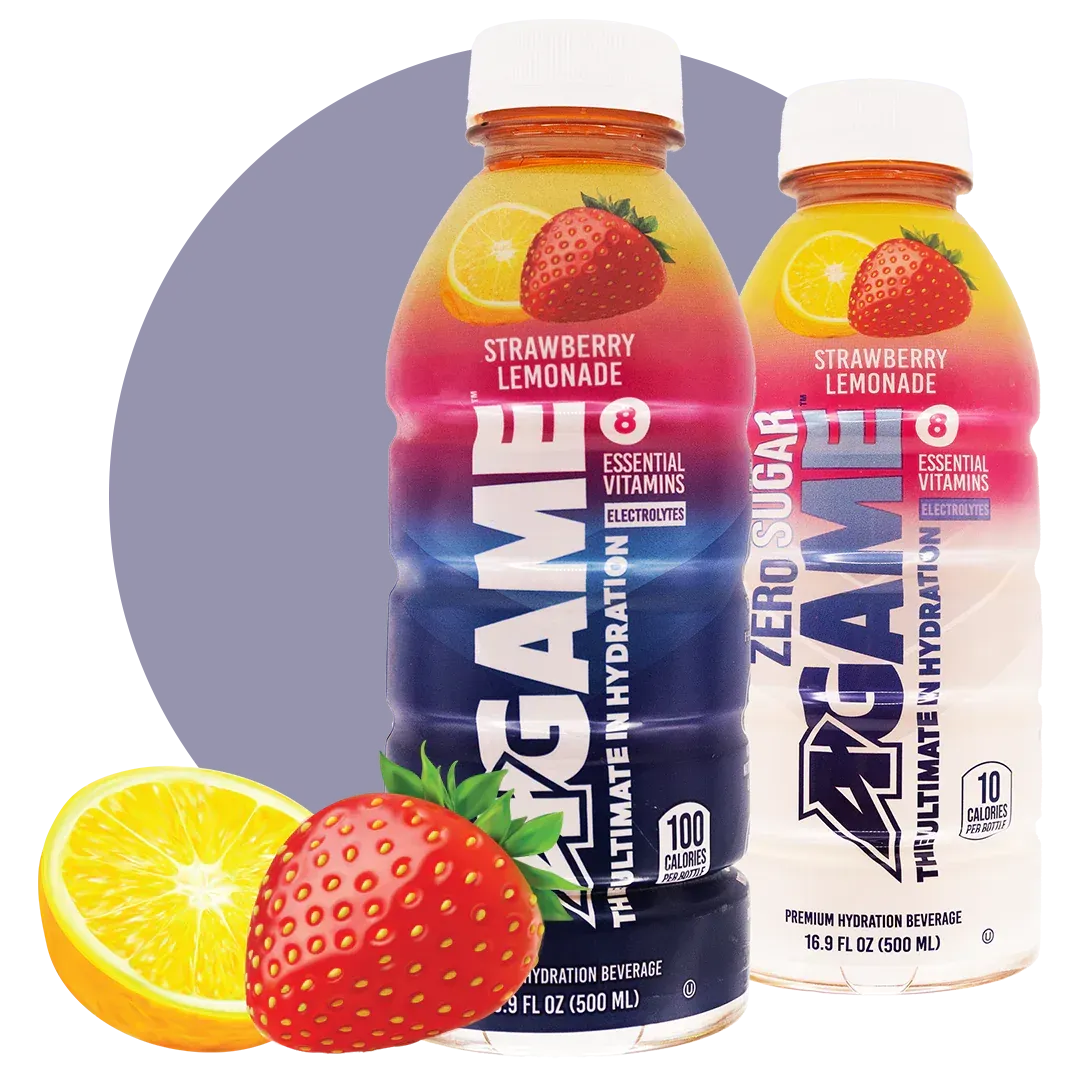
A-GAME
- Format: Ready-to-drink bottles
- Team-style purchase used for math: 12-pack, 16 fl oz bottles
- Yield assumptions (for 16 oz servings): 1 bottle = 1 serving
- Price used (2026 snapshot): $31.99 per 12-pack
- Cost per 16 oz: $2.67
- What you are really paying for: Convenience, distribution speed, and no mixing
Gatorade Thirst Quencher Powder (6-gallon pouch)
- Format: Bulk powder
- Team-style purchase used for math: 6-gallon pouch fruit punch, bulk price per pouch
- Yield assumptions (for 16 oz servings): 6 gallons = 768 oz = 48 servings of 16 oz
- Price used (2026 snapshot): $10.79 per pouch (bulk pricing shown)
- Cost per 16 oz: $0.22
- What you are really paying for: Lowest cost per serving when you can mix and serve in cups or bottles
Liquid I.V. Hydration Multiplier
- Format: Stick packs
- Team-style purchase used for math: 16-stick pack price-per-stick shown
- Yield assumptions (for 16 oz servings): 1 stick typically mixed into about 16 oz water
- Price used (2026 snapshot): about $1.75 per stick (one-time purchase)
- Cost per 16 oz: $1.75
- What you are really paying for: Portability and individual control (each athlete mixes)
What the math looks like (so you can sanity-check it)
- Gatorade powder cost per 16 oz: $10.79 per 6-gallon pouch ÷ 48 servings (16 oz) = $0.22 per 16 oz.
- A-GAME cost per 16 oz: $31.99 ÷ 12 bottles = $2.67 per 16 oz bottle.
- Liquid I.V. cost per 16 oz: listed as ~$1.75 per stick (one-time). One stick typically mixes into ~16 oz = $1.75 per 16 oz.
The takeaway for “best value sports drinks for teams”
If your team can reliably run coolers, cups, and mixing, Gatorade powder typically dominates cost per serving.
If you need fast distribution with minimal setup, ready-to-drink can still be “high value” in the real world because it reduces staff time, mixing mistakes, and wasted product.
If your athletes travel constantly or you want each athlete to control their own intake, stick packs trade budget efficiency for portability.
Here's what you need to know about ingredients and hydration for athletes
For most team sports, hydration effectiveness depends on fluid and electrolyte intake, sometimes with carbohydrates, matched to heat, sweat rate, and session length.
Coaches do not need a chemistry degree to make a smart call here. You just need a simple framework.
Why sodium, potassium, and carbs matter for team sports
- Sodium helps retain fluid and supports hydration during sweat-heavy sessions. If you are practicing in heat, humidity, or long blocks, sodium becomes a greater concern.
- Potassium also plays a role in fluid balance. Most classic sports drinks include both sodium and potassium, just in different ratios.
- Carbs can matter when practices are long or intense. For short practices, athletes may not need much sugar. For longer sessions or tournaments, carbs can support performance, especially if athletes are not eating between games.
How A-GAME’s positioning compares to classic powders and stick packs
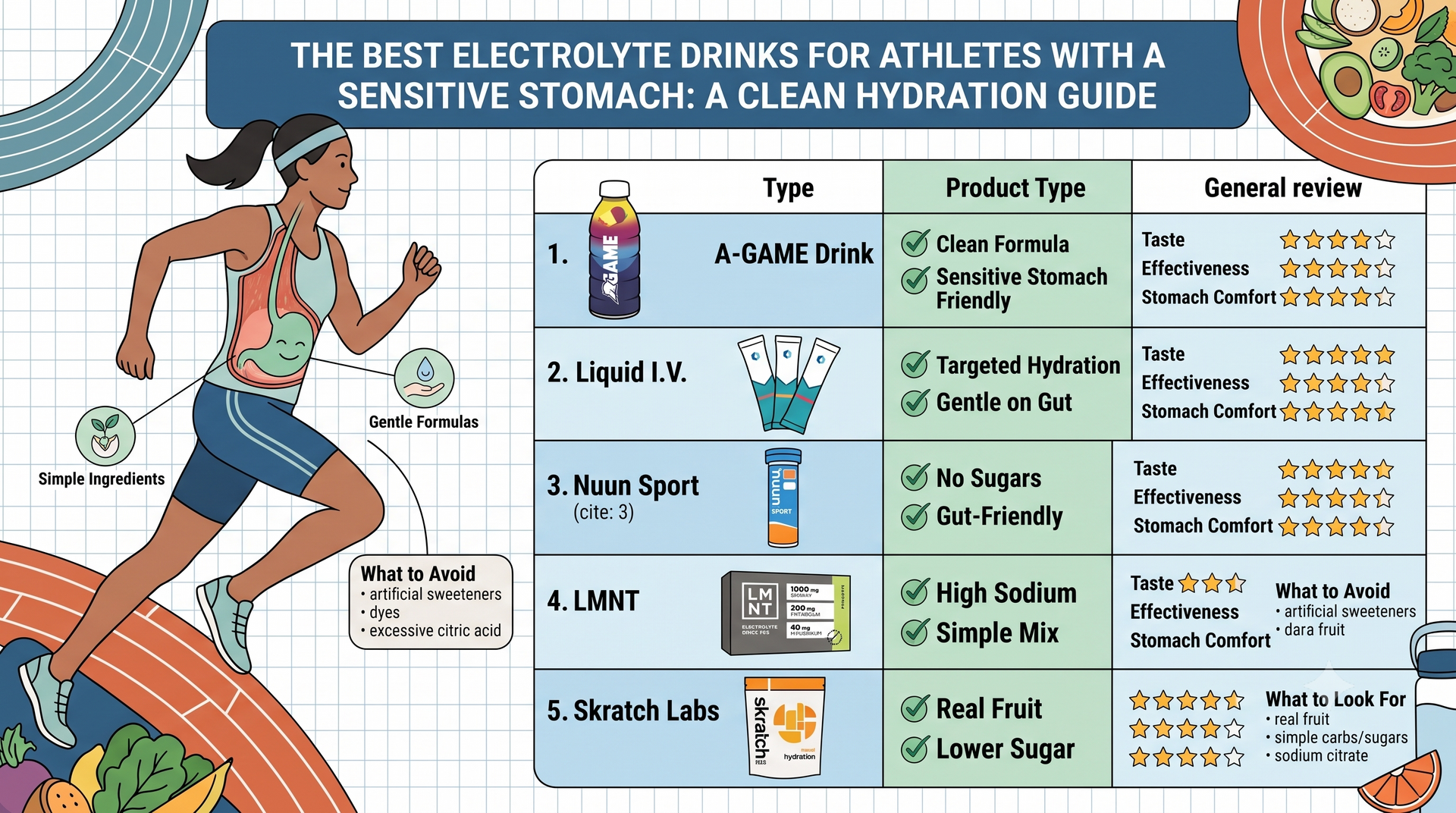
A-GAME positions itself around “clean hydration” cues that many parents, coaches, and athletic directors now ask about: no artificial colors, flavors, or sweeteners, plus electrolytes from unrefined sea salt, natural honey, and eight essential vitamins
Gatorade’s 6-gallon powder is designed as a classic team-sideline drink: familiar taste, carb-and-electrolyte profile, and bulk mixing for coolers. Product labeling and listings emphasize that the pouch “makes 6 gallons,” which is the key value proposition for the team.
Liquid I.V. is designed for portable mixing and includes a multi-nutrient angle with electrolyte and vitamin messaging, with per-stick pricing that reflects convenience and travel use cases.
Coach-friendly ingredient guidance (simple rules that work)
If you want a quick rule set for most youth and high school teams:
- Short practice (under ~60 minutes, mild weather): water is often enough, especially if athletes are eating normally.
- Heat, long practice blocks, or tournament days: consider an electrolyte drink, as sweat loss can add up quickly.
- High-intensity, long sessions: carbs can help, but you can also get carbs from food if timing allows.
If you are choosing between “cleaner ingredient cues” versus “lowest cost per serving,” it is reasonable to run a hybrid strategy: bulk powder for standard practices and a ready-to-drink option for travel days, high-heat games, or when logistics make mixing unreliable.
What results can teams expect when switching to bulk powders?
Teams typically realize significant cost savings and simpler sideline hydration, but only if they standardize mixing and serving.
Let’s talk about what happens when a team switches from ready-to-drink cases to bulk powder.
1) The budget swing is real
Using the table above, compare a 16 oz serving:
- A-GAME (case pricing) lands around $2.67 per 16 oz.
- Gatorade powder (bulk pouch pricing) lands around $0.22 per 16 oz.
That delta is not small. It changes what a program can afford across a season.
Example season math (simple and realistic):
- Roster: 20 athletes
- 3 practices per week, 12-week season = 36 practices
- If each athlete averages one 16 oz serving per practice:
- Total servings = 20 × 36 = 720 servings
Estimated spend using the snapshot pricing:
- Powder plan: 720 × $0.22 = $158.40 (plus cups, cooler, ice)
- Ready-to-drink plan: 720 × $2.67 = $1,922.40
Even if your actual pricing differs, the direction remains the same: bulk mixing usually saves significantly.
2) Athletes often accept powder faster than coaches expect
The biggest reason powder works is also the simplest: athletes already know it.
Familiar taste tends to reduce friction, especially in youth and high school settings. That is why powders remain the default “team hydration” tool when budgets matter.
3) The real win is consistency, not perfection
The teams that get the best results from powder do three boring things:
- They standardize the recipe and do not freestyle it.
- They pick one serving method (cups or bottles) and stick to it.
- They assign hydration setup to a role, not a hope.
Coach testimonial callout
Here is one example from a state championship context:
“We play in extreme conditions where hydration is essential, and A-GAME was a critical part of our in-game recovery and hydration.”
Coach Kurt Divich, Doral Academy Red Rock
4) Common issues and quick fixes
- Issue: “It tastes weak.”
Fix: Your mixing ratio is off. Measure water volume and scoop count once, then document it on the cooler. - Issue: “We run out mid-practice.”
Fix: Build a buffer. Plan for 1.5 servings per athlete on heat days. - Issue: “Too messy or too much cleanup.”
Fix: Assign a rinse routine and keep a dedicated measuring cup in the cooler kit.
How can you choose the right sports drink plan for your team?
Select the plan that fits your roster size, schedule, and on-the-field realities. Then choose the product format that makes compliance easiest.
Keep this checklist handy in the field and locker room so your team stays at its best.
Team hydration checklist (print this in your notes app)
Roster and frequency
- Roster size (example: 14, 18, 25)
- Practices per week
- Typical practice length
- Tournament days per month
Environment and sweat load
- Hot and humid most of the season, yes or no
- Outdoor in direct sun, yes or no
- High-contact gear or heavy uniforms, yes or no
Logistics
- Do you have reliable access to water at the field?
- Do you have at least one cooler that stays cold?
- Do you have a consistent person to set up hydration?
- Do athletes bring their own bottles, yes or no
Compliance
- Does your team reliably drink water on breaks?
- Does taste matter a lot for your athletes?
- Do parents or administrators care about ingredients like dyes and artificial additives?
Quick recommendations by team scenario
Scenario A: Budget-first, you can run coolers
- Best value: Gatorade powder (6-gallon pouches) mixed in bulk.
- Why: the cost-per-serving is hard to beat when you can reliably mix and serve.
Scenario B: You need speed and simplicity
- Best fit: A-GAME case ordering for ready-to-drink distribution.
- Why: no mixing, easy to hand out, easy to count inventory, and aligns with A-GAME’s “no artificial colors, flavors, or sweeteners” positioning.
Scenario C: Travel-heavy, athletes mix individually
- Best fit: Liquid I.V. stick packs.
- Why: portability, each athlete controls their mix, and it works when you cannot bring coolers everywhere.
Scenario D: Hybrid plan (often the best real-world answer)
- Use powder for practices and ready-to-drink for games, travel, and heat days.
- Why: you capture bulk savings most of the time while keeping compliance high on the days that matter most.
Ready to save? Here’s how to get A-GAME team pricing today
If you want the convenience of ready-to-drink plus A-GAME’s ingredient positioning, request team pricing through A-GAME’s Team Sales.
A-GAME is built around a “clean hydration” story that many programs care about in 2026: no artificial colors, flavors, or sweeteners, electrolyte minerals from unrefined sea salt, natural honey, and added vitamins (per brand materials).
If your program values those cues and wants a simple distribution model, team ordering can make your sideline hydration easier to manage.
For custom quotes, volume ordering, or questions about the best plan for your roster,
contact A-GAME today.