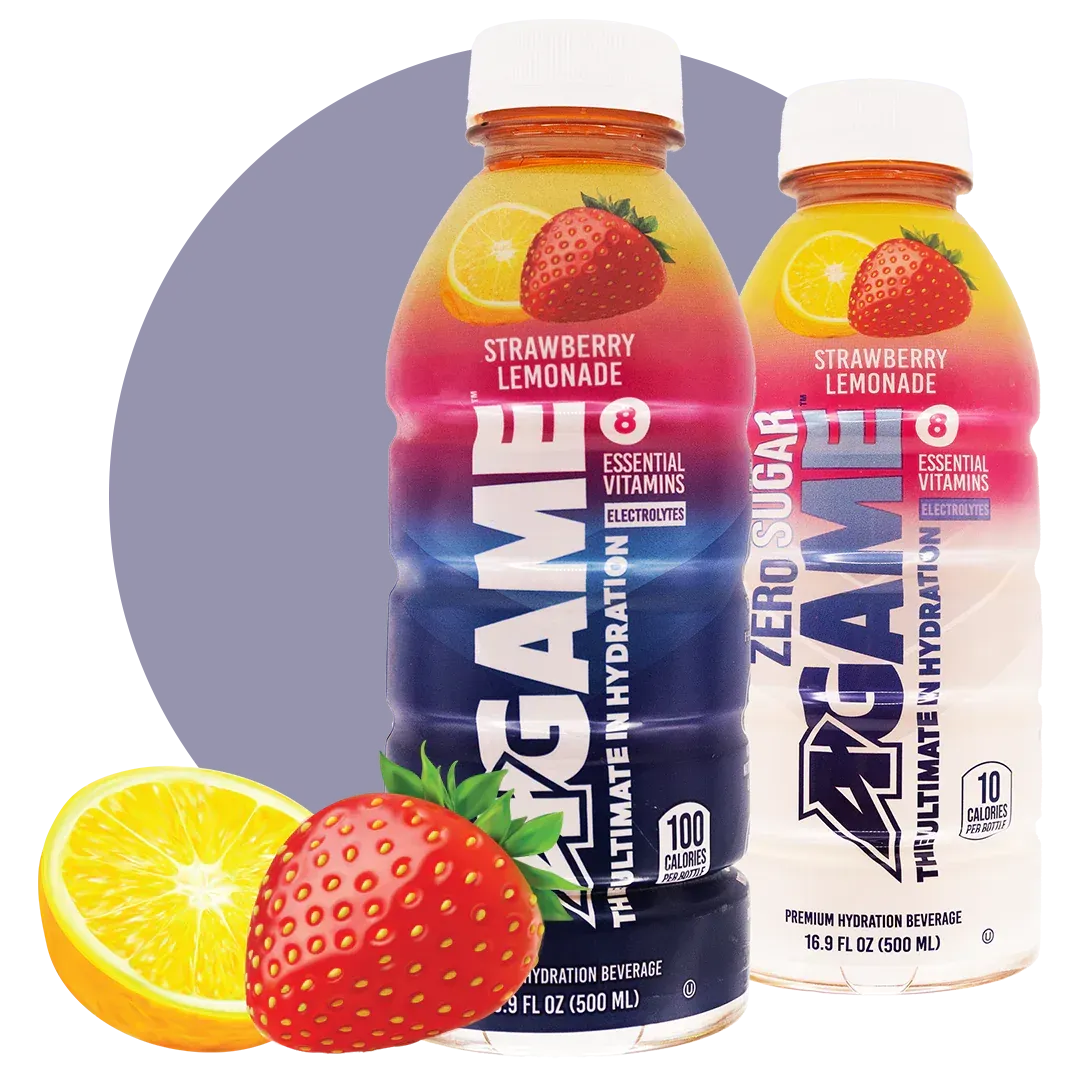


A-GAME Sodium Content vs. Gatorade, Prime & LMNT: A 2026 Nutritional Showdown
Sodium is a key element to any training routine when staying hydrated.
Before you grab that bottle, consider the sodium content on the label
When it comes to staying hydrated and performing your best, not all sports drinks are created equal, especially when it comes to sodium.
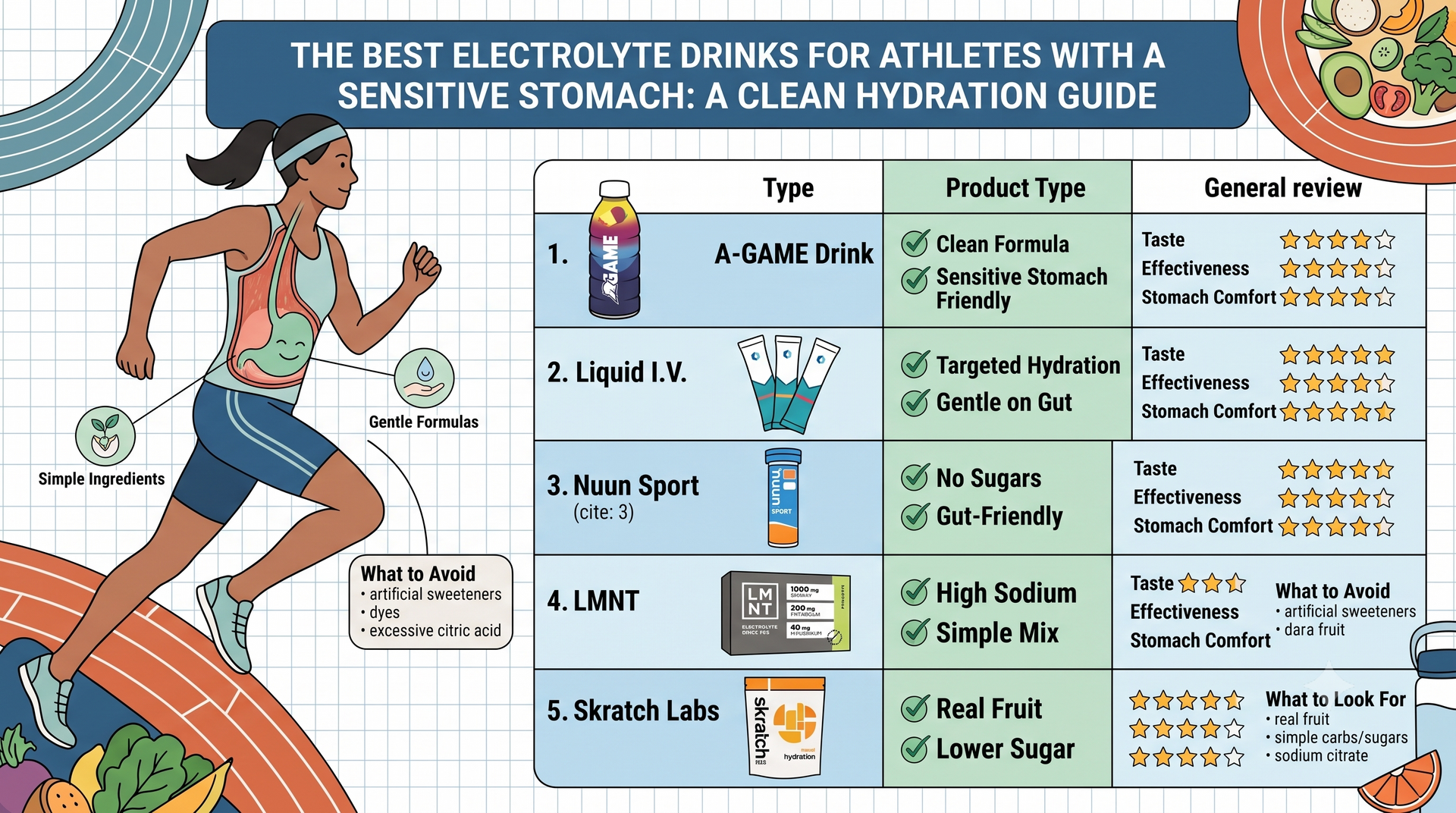
If you’re wondering how A-GAME stacks up against big names like Gatorade, Prime, and LMNT, you’re in the right place.
This guide breaks down sodium in sports drinks side by side (normalized to 12 fl oz), explains what the numbers mean, and helps you pick the right sodium range for your training, your sport, and your sweat rate.
If you want the quick answer before we go deeper: A-GAME contains 200mg of sodium per 12 fl oz serving, placing it in a practical mid-range for most athletes who want meaningful electrolyte replacement without going ultra-high.
Here's why sodium matters for athletes
Sodium is the electrolyte that helps you hold onto the fluid you drink.
If you sweat and only replace water, you can end up feeling flat, crampy, or just “off” even when you think you did everything right.
Sodium supports fluid balance by helping your body retain water, and it also supports nerve signaling and muscle function. In plain English: if you are sweating hard, sodium helps the water you drink actually stick around long enough to matter.
The reason this comparison matters is simple.
Sweat is salty, and sodium losses can be significant, especially in heat, long practices, or high-intensity repeat sprint work. Some athletes lose far more salt than others, and that personal “salt loss” is a huge reason why one drink feels perfect for one person and totally ineffective for another.
Over-drinking plain water during prolonged endurance efforts can dilute blood sodium in some situations.
That is one reason many sports hydration guidelines emphasize including sodium as part of an overall plan when sessions get long, hot, or both.
How does A-GAME stack up against other top sports drinks?
A-GAME lands in the mid-range of sodium in sports drinks when you standardize servings to 12 fl oz. It sits above “flavored water” style hydration drinks that are very low sodium, and below high-sodium mixes designed for heavy sweaters and endurance athletes.
Here’s a quick look at how A-GAME compares to other leading sports drinks when it comes to sodium content (per 12 fl oz):
A-GAME vs. Other Sports Drinks: Sodium Comparison
A-GAME (ready-to-drink)
- Label serving: Varies by bottle
- Sodium per label serving: Typically ~241 to 250 mg per ~16 to 16.9 fl oz bottle
- Sodium per 12 fl oz (standardized): 200 mg
- Sodium category: Mid-range
Gatorade Thirst Quencher (ready-to-drink)
- Label serving: 12 fl oz
- Sodium per label serving: 160 mg
- Sodium per 12 fl oz (standardized): 160 mg
- Sodium category: Mid-range
Powerade (ready-to-drink)
- Label serving: 12 fl oz
- Sodium per label serving: 240 mg
- Sodium per 12 fl oz (standardized): 240 mg
- Sodium category: Mid-range
Liquid I.V. Hydration Multiplier (powder)
- Label serving: 1 stick mixed in ~16 fl oz water
- Sodium per label serving: 500 mg
- Sodium per 12 fl oz (standardized): ~375 mg
- Sodium category: High
Pedialyte Sport (ready-to-drink)
- Label serving: 12 fl oz
- Sodium per label serving: 490 mg
- Sodium per 12 fl oz (standardized): 490 mg
- Sodium category: High
LMNT (powder)
- Label serving: 1 stick mixed in ~16 fl oz water
- Sodium per label serving: 1000 mg
- Sodium per 12 fl oz (standardized): ~750 mg
- Sodium category: Very high
BODYARMOR Sports Drink (ready-to-drink)
- Label serving: 12 fl oz
- Sodium per label serving: 20 mg
- Sodium per 12 fl oz (standardized): 20 mg
- Sodium category: Low
Prime Hydration (ready-to-drink)
- Label serving: 16.9 fl oz (500 mL)
- Sodium per label serving: 10 mg
- Sodium per 12 fl oz (standardized): ~7 mg
- Sodium category: Very low
A-GAME contains
200mg of sodium per 12 fl oz serving, which positions it as a mid-range sodium option for everyday training and many field and court sports.
A quick note on the A-GAME number: A-GAME sodium is commonly listed on-pack per 16 to 16.9 fl oz bottle (often around 241 to 250 mg).
For this showdown, we standardize everything to 12 fl oz and round to a clean comparison number so the table stays readable. Always check your exact label, especially if flavors or formulations change.
Source notes for the table values: Gatorade (12 oz sodium), LMNT (1000 mg sodium per stick), Powerade (240 mg per 12 oz), Liquid I.V. (500 mg sodium per stick), Pedialyte Sport (490 mg sodium per 12 oz), BODYARMOR (20 mg per 12 oz), Prime Hydration (10 mg per 16.9 oz).
What should you look for in a sports drink's sodium content?
The right sodium level depends on how much you sweat, how long you train, and whether you are replacing fluids during the session or mostly after.
A practical way to interpret sodium in sports drinks is to think in ranges. These ranges are not medical rules, just a useful decision shortcut for athletes and parents comparing labels:
- Low sodium: under ~50 mg per 12 fl oz
Often closer to flavored water. Fine for short, low-sweat sessions, but not a strong electrolyte replacement play. - Mid-range sodium: about ~150 to 300 mg per 12 fl oz
The classic “sports drink” zone, useful for many practices, games, and workouts, especially when you want noticeable sodium without going extreme. - High sodium: above ~300 mg per 12 fl oz
Better aligned with heavy sweaters, hot conditions, long endurance sessions, and athletes who know they lose a lot of salt.
Why mid-range sodium works for most athletes: it helps with fluid retention and thirst drive, without pushing sodium so high that taste becomes challenging or the product becomes a specialized tool for only certain contexts.
It is the middle lane that fits a lot of training reality: 45 to 90 minute sessions, team practices, doubles, conditioning days, and weekend tournaments where you need a steady plan you can repeat.
When you might go higher: if you are training in heat, finishing long sessions with salt crust on your clothes, cramping late in workouts, or consistently losing body weight in training (a sign you are not replacing enough fluid).
In those scenarios, a higher sodium drink or adding sodium through food can be the difference between “I survived” and “I performed.”
When you might go lower: short workouts, low sweat rate, or situations where you are mostly hydrating casually through the day. Low-sodium drinks can still be enjoyable and useful, but it helps to be honest about what they are: many are not built for meaningful electrolyte replacement during heavy sweat.
Here's what sets A-GAME apart in the hydration game
A-GAME’s core advantage is balance. It is positioned as a real sports drink, not just flavored water, with sodium levels that are meaningful for athletes but still approachable for everyday use.
A-GAME also leans into “clean label” cues that matter to a lot of active families and competitive athletes: the brand positions around sea salt electrolytes and avoiding artificial dyes, and it supports hydration with additional electrolytes like potassium depending on the formula.
That combination helps A-GAME fit both performance moments and daily hydration habits, which is often where athletes win over time: consistency, not perfection.
If you want a deeper internal comparison inside the A-GAME universe, two related reads are worth bookmarking:
- The Best Sports Drinks of 2026: A Nutritionist’s Guide to Smarter Hydration
(useful if you are deciding between “sports drink” sodium and “hydration drink” positioning).
- The True Value of a Sports Drink: Beyond the Label and the Price Tag(great for understanding when athletes choose lower sugar but still need sodium).
Which sports drink is right for you?
Choose your sports drink sodium level based on the session, not the marketing. The fastest way to make a smart pick is to match sodium to sweat.
If you want a simple guide:
High sodium (300+ mg per 12 oz):
This is for heavy sweaters, hot conditions, long endurance sessions, and athletes who are repeatedly training past an hour and know they struggle late. LMNT, Pedialyte Sport, and many powder mixes like Liquid I.V. land here depending on how you mix them and how much you drink.
These can be powerful tools, but they are often more “specialized” than what most people need for a standard practice.
Mid-range sodium (150 to 300 mg per 12 oz):
This is the
everyday athlete lane. Think practices, games, lifts, and conditioning, especially for field and court sports. It is also a smart choice for parents because it gives meaningful sodium without turning every bottle into an extreme electrolyte intervention.
A-GAME, Gatorade, and Powerade generally sit in this mid-range zone when standardized to 12 fl oz.
Low sodium (under 50 mg per 12 oz):
This can work for light sweat sessions or casual hydration, but if your
real goal
is electrolyte replacement during hard training, very low sodium options can leave you under-dosed for what you are losing.
Prime and BODYARMOR are examples of drinks that are typically very low sodium relative to classic sports drinks, even though they may emphasize other ingredients.
If you are not sure where you fall, start with mid-range.
Then adjust. If you finish sessions craving salt, getting headaches, cramping late, or feeling “washed out” even after drinking plenty, that is a signal to experiment with more sodium. If you feel great and your sessions are short, you may not need to push sodium higher.
Ready to upgrade your hydration? Try A-GAME today and experience the difference of balanced electrolytes.