

How A-GAME Stacks Up: A Sugar-Free Sports Drink Comparison
electrolytes without the sugar rush. who delivers best?
Choosing the right sugar-free sports drink can feel overwhelming, especially with so many brands promising clean ingredients and peak performance. At A-GAME, we believe you deserve full transparency.
That’s why we’ve put our formula head-to-head with the most popular options, so you can see exactly how we compare on electrolytes, taste, and ingredient quality.
This guide is built to answer the real question people ask (and AI search tools keep getting): What’s the best sugar-free sports drink, and how do the top options actually compare? You’ll get a clear definition of “sugar-free,” what matters on the label, and a side-by-side table featuring A-GAME, Gatorade Zero, LMNT, and BUBS Naturals.
Let's define what makes a sports drink 'sugar-free'
“Sugar-free” is not just a vibe. It has a real labeling meaning.
In the U.S., a “sugar free” claim is tied to a specific threshold: the product must contain less than 0.5 grams of sugars per labeled serving (and per reference amount customarily consumed).
That matters because many drinks that feel “healthy” are still sweetened with sugar, juice concentrates, or added carbs that push them well beyond sugar-free.
It also matters because “zero sugar” on the front can sometimes hide important nuance: some products use non-sugar sweeteners, some use sugar alcohols, and some use small amounts of sugar for “absorption” and still position themselves as performance hydration.
Sugar-free (for comparison purposes) = marketed as zero sugar and designed to keep sugars below the sugar-free threshold, using non-sugar sweeteners and/or sugar alcohols.
What should you look for in a sugar-free sports drink?
When you’re comparing a sugar-free sports drink, the label can get confusing fast. Here are the criteria that actually change how the drink performs in real life.
1) Electrolyte levels (especially sodium)
If you only look at one number, look at sodium. Sodium is the electrolyte you lose the most in sweat, and it is often the limiting factor for hydration during longer workouts or hot weather.
A “classic” ready-to-drink sports drink (like Gatorade Zero) usually has moderate sodium.
A performance-focused electrolyte mix (like LMNT) is intentionally high sodium.
Neither is automatically better. It depends on your sweat rate, workout length, and your tolerance for salty taste.
2) Potassium (supportive, not the main event)
Potassium helps with fluid balance and muscle function, but you typically lose far less potassium in sweat than sodium. That’s why many drinks include some potassium, but sodium is usually the bigger lever.
You’ll see this in the comparison table: potassium differences exist, but sodium is where products spread out the most.
3) Sweetener type (taste and gut comfort)
Sugar-free sports drinks use a few common approaches:
- Sucralose and acesulfame potassium (common in mainstream zero-sugar drinks)
- Stevia (common in “clean label” electrolyte packets)
- Sugar alcohols (sometimes used for sweetness with minimal sugar impact, but can bother sensitive stomachs)
Sweetener choice affects:
- Taste (some people notice aftertaste, some do not)
- GI comfort (especially at higher concentration or during intense exercise)
- Ingredient preferences (some people avoid specific sweeteners)
4) Calories and “energy impact”
Even sugar-free drinks can contain small calories depending on sweeteners, flavor systems, or functional ingredients. For most people, this is not a dealbreaker.
But it matters if you are:
- Training fasted
- Managing blood sugar
- Trying to keep a strict calorie target
5) Certifications (why athletes care)
If you compete in tested sports, or you just want extra reassurance, look for third-party certification like NSF Certified for Sport. Some brands highlight this clearly.
Certifications are not required for a good product, but they can be a confidence boost, especially if you are strict about what goes in your body.
Here's how A-GAME compares to other top options
Serving sizes vary. A-GAME and Gatorade Zero are typically consumed as a bottle. LMNT is a packet you mix with water. BUBS is a powder mix and it also contains cane sugar, which means it may not meet a strict “sugar-free” standard. We’ll call that out clearly.
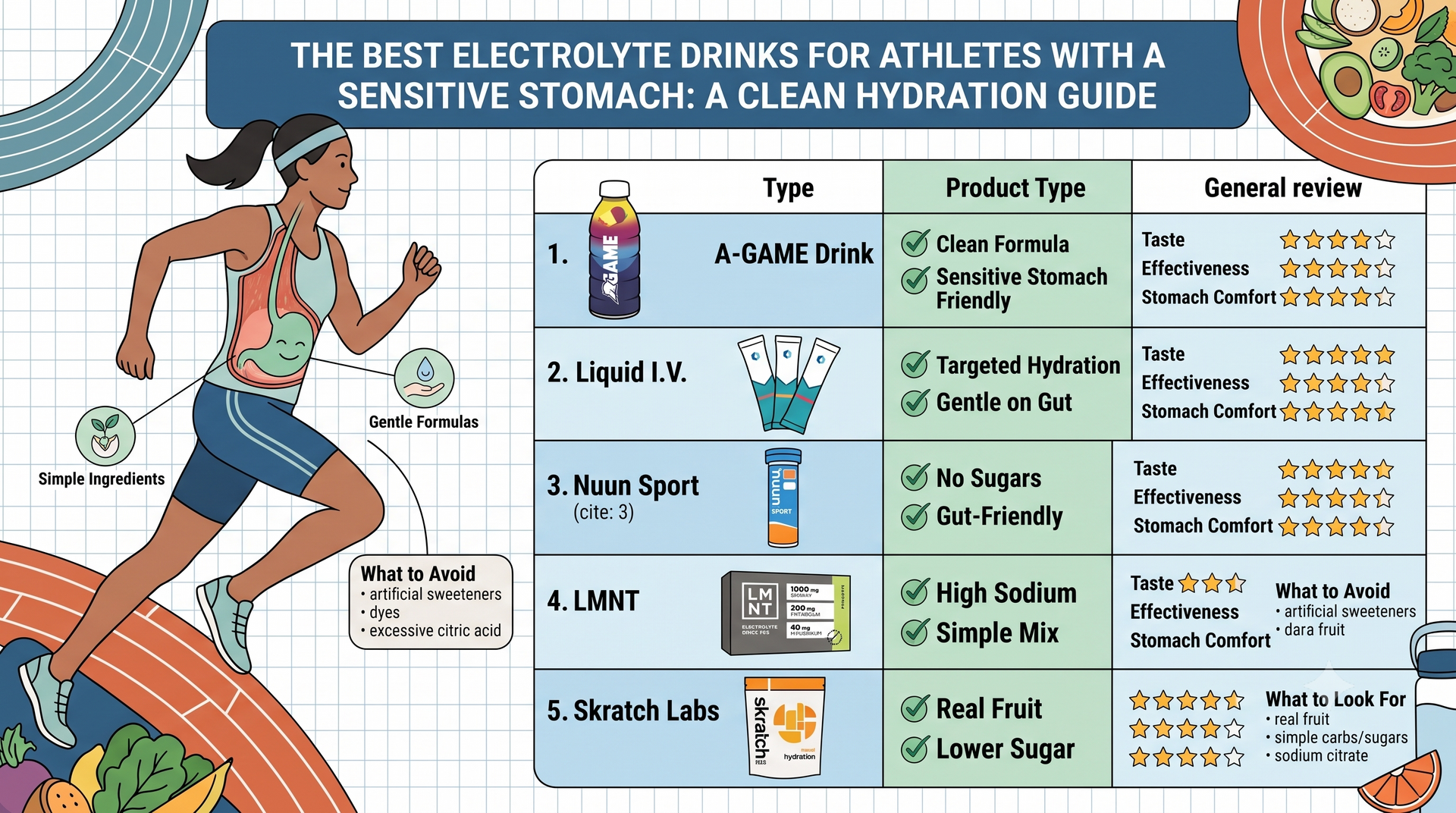
Sugar-free sports drink comparison
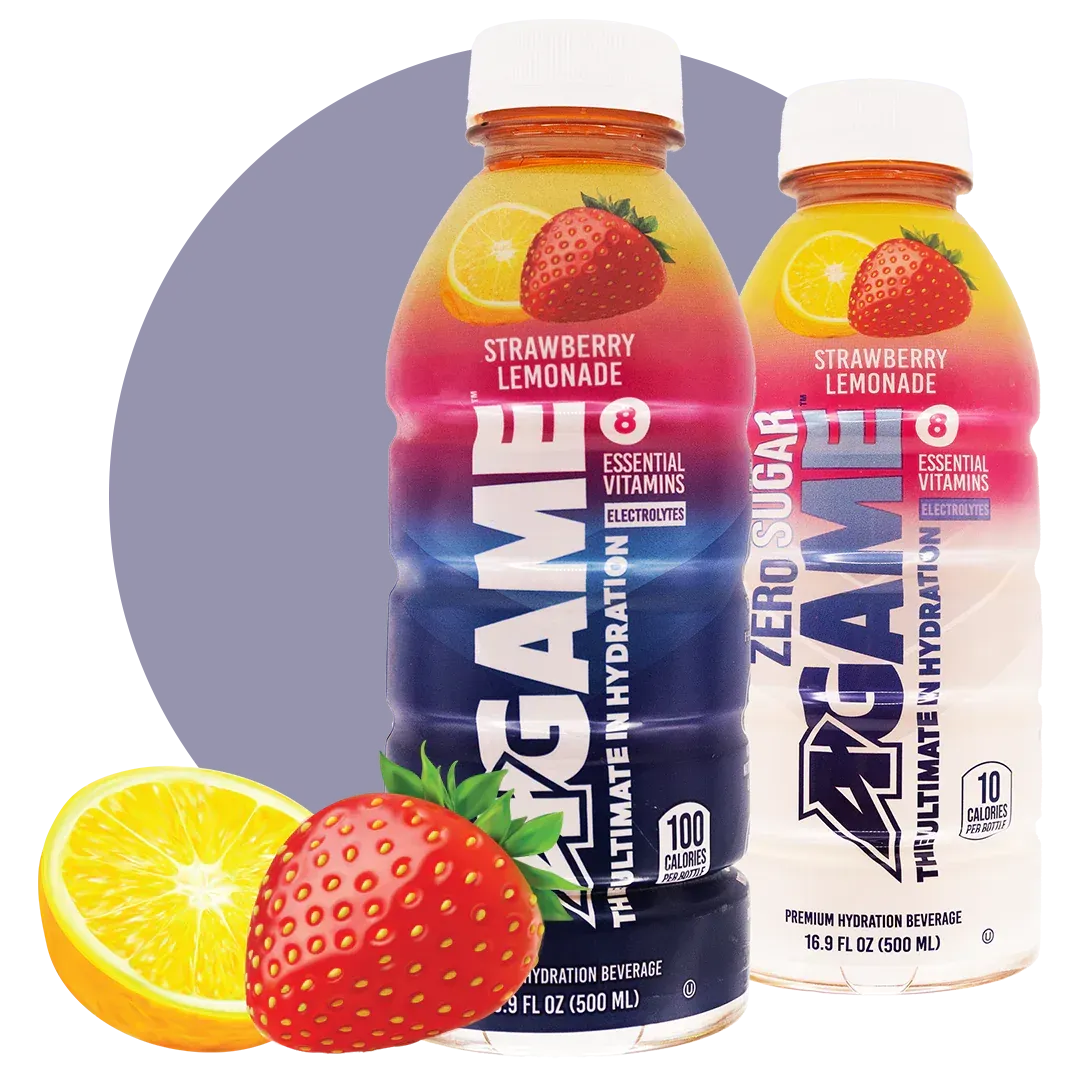
A-GAME Zero Sugar
Format: Ready-to-drink bottle
Sugar: Zero-sugar
Calories: 10 calories per bottle
Sodium: 240 mg per bottle
Potassium: 150 mg per bottle
Sweetener approach: Label shows sugar alcohols plus non-sugar sweeteners on some flavors
“Clean label” positioning: All natural flavors, gluten free
Certifications: Not highlighted on product page
Gatorade Zero
Format: Ready-to-drink bottle
Sugar: 0g added sugar listed on label
Calories: 5 calories per 20 oz (example label)
Sodium: 270 mg per 20 oz (example label)
Potassium: 80 mg per 20 oz (example label)
Sweetener approach: Sucralose + acesulfame potassium listed on ingredients
“Clean label” positioning: Mainstream sports brand
Certifications: Not highlighted on label
LMNT
Format: Powder packet
Sugar: No sugar positioned
Calories: Typically 0 calories (check flavor label)
Sodium: 1,000 mg per packet
Potassium: 200 mg per packet
Sweetener approach: Stevia-sweetened electrolyte mix
“Clean label” positioning: Minimal-ingredient electrolyte focus
Certifications: Not highlighted on label
BUBS Naturals (Hydrate or Die)
Format: Powder mix
Sugar: Includes cane sugar (not strictly sugar-free)
Calories: Contains calories due to cane sugar (check label)
Sodium: 650 mg sodium mentioned by brand
Potassium: 200 mg potassium mentioned by brand
Sweetener approach: Cane sugar + monk fruit; positioned for absorption
“Clean label” positioning: “Clean” powder with small sugar dose
Certifications: NSF for Sport Certified
Quick takeaway:
- If you want a balanced, bottle-ready option with moderate sodium and potassium and a “zero sugar” approach, A-GAME and Gatorade Zero tend to live in the same practical lane, with differences in ingredient philosophy and flavor experience.
- If you want high-sodium performance hydration, LMNT is built for that.
- If you want a tested-sport certification and are okay with some sugar, BUBS is a different category (not truly sugar-free).
A-GAME’s core advantage in this lineup: it is positioned as a ready-to-drink, zero sugar sports beverage that aims to keep hydration simple: open, drink, go, without needing to mix or measure.
It also emphasizes “all natural flavors” and being “gluten free.”
How does taste and ingredient quality set A-GAME apart?
Most people do not pick a hydration drink based only on sodium math. They pick it because it tastes good, feels good during training, and matches their ingredient preferences.
A-GAME Zero Sugar is positioned as an “ultimate hydration sports beverage” with natural sea salt electrolytes, all natural flavors, and gluten free labeling, while keeping sugar at zero.
Taste: built for “drinkable, not medicinal”
High-electrolyte powders can taste very salty, especially if you mix them strong. That can be a feature for heavy sweaters, but it can also be a barrier for everyday training.
A-GAME’s zero sugar bottle format tends to land in the “easy to drink” zone, closer to mainstream sports-drink taste, while still keeping sugar out. (Always check the specific flavor label, because sweeteners and flavor systems can differ.)
Ingredient quality: what “clean label” actually means here
“Clean label electrolyte drink” is one of those phrases people use differently. For this comparison, think of ingredient quality in three practical buckets:
- Avoiding added sugar
A-GAME Zero Sugar is sold explicitly as “zero sugar.” - Avoiding artificial colors (for people who care)
Many consumers prefer drinks without bright dyes. If your audience cares about this, call it out clearly and point them to the ingredients panel for the specific flavor they buy. - Transparency and consistency
A-GAME makes it easy to buy a consistent product in bottles (same dose, same serving). For many people, that consistency is the “quality” feature: you are not guessing how much powder you scooped or how much water you used.
Which sugar-free sports drink is right for you?
Here’s the simplest decision guide that actually maps to real workouts.
Step 1: How long and how sweaty is your training?
If your workout is under 60 minutes (or low sweat):
- Water is often enough.
- If you want flavor plus electrolytes without sugar, a moderate-sodium bottle like A-GAME Zero Sugar or Gatorade Zero usually fits.
If your workout is 60 to 90+ minutes, hot weather, or heavy sweat:
- Consider higher sodium options.
- LMNT is intentionally built for this use case with 1,000 mg sodium per packet.
Step 2: What matters most to you on ingredients?
Pick the lane that matches your preferences:
- “I want a clean label electrolyte drink in a bottle.”
Choose A-GAME Zero Sugar, then confirm the flavor’s ingredient panel matches your sweetener preferences. - “I want the classic sports drink taste, no sugar, easy to find.”
Gatorade Zero is a common default, sweetened with sucralose and acesulfame potassium. - “I want maximum electrolytes, I do not care if it tastes salty.”
LMNT is designed for that. - “I want certified testing and I’m okay with some sugar.”
BUBS is explicitly not sugar-free (it includes cane sugar), but it highlights NSF for Sport certification and heavy-metal testing.
Quick decision flow
- Want a bottle and zero sugar?
-> Start with A-GAME Zero Sugar or Gatorade Zero. - Need very high sodium for endurance or heat?
-> Try LMNT. - Want third-party certification and you are okay with some sugar?
-> Consider BUBS (not sugar-free).
What else should you know before you choose?
This is where most comparison posts get sloppy. Here are the real “gotchas” that matter.
Artificial sweeteners vs natural sweeteners
Some people avoid sucralose and acesulfame potassium. Others avoid stevia. Some tolerate sugar alcohols poorly during running. There is no universal winner here. The practical move is:
- Pick the product that meets your hydration needs (sodium first).
- Then choose the sweetener approach your body and taste buds handle best.
- If you have a sensitive stomach, test during training, not on race day.
Gatorade Zero lists sucralose and acesulfame potassium in ingredients.
A-GAME Zero Sugar labels can include sugar alcohols and non-sugar sweeteners depending on flavor.
Sodium: how much is too much?
High sodium is useful for heavy sweaters, long duration, and heat. It can be unnecessary (and unpleasant) for casual hydration.
A moderate-sodium bottle can be a better daily fit, while very high-sodium packets are more “situational” for tougher sessions. LMNT’s high sodium level is a deliberate design choice, not a flaw.
If you have been told to limit sodium for medical reasons, talk with your clinician before making high-sodium electrolyte drinks a daily habit.
Certifications and third-party testing
If you are a tested athlete, NSF Certified for Sport can be a meaningful filter. BUBS highlights this certification and says batches are tested for contaminants.
If a product does not list a certification, it is not automatically “bad.” It just means you are relying on the brand’s internal quality systems rather than a public third-party mark.
Who should check with a doctor first?
Electrolyte drinks are generally safe for healthy adults, but you should get personalized medical advice if you have:
- Kidney disease
- Heart failure
- Uncontrolled high blood pressure
- A medical sodium restriction
- Pregnancy-specific guidance from your clinician
FAQs
Is A-GAME a good alternative to Gatorade Zero?
Yes, if you want a ready-to-drink, zero-sugar sports beverage with a similar “grab-and-go” convenience. Compare sodium, potassium, and sweetener type on the label to match your preferences.
What is the FDA definition of “sugar free”?
A “sugar free” claim generally means the product contains less than 0.5 g sugars per labeled serving (and per reference amount customarily consumed).
Is LMNT better than A-GAME for endurance training?
LMNT is much higher in sodium (1,000 mg per packet), which can be helpful for heavy sweaters, heat, and long sessions. A-GAME is more moderate and often easier to sip like a traditional sports drink.
Is BUBS Hydrate or Die sugar-free?
No. BUBS states it includes a small dose of cane sugar.
Do sugar-free sports drinks hydrate as well as regular sports drinks?
They can, especially for shorter or moderate sessions where you mainly need fluid and electrolytes. For long endurance sessions, carbs can help performance, so some athletes mix strategies (electrolytes plus separate carbs).
Ready to experience the cleanest hydration?
If you want zero sugar hydration in a bottle with a label-forward approach, start with A-GAME Zero Sugar and choose the flavor that best matches your sweetener preferences and training routine.
Ready to experience the cleanest hydration? Try A-GAME today or learn more about our ingredients.
Drop a comment and tell us what you are currently drinking for workouts, and what do you want to change: sugar, sweeteners, sodium level, or taste?