

The Modern Man’s Guide to Sports Drinks: Performance Without the Junk
What is the best sports drink for men that actually helps performance, without loading you up with junk?

Here is the truth most labels hide in plain sight. “Sports drink” is not one category. Some are built to fuel long sessions. Some are basically flavored water with electrolytes.
Some are caffeine bombs posing as hydration. Some are designed to keep ingredients simple for people who want a sports drink without artificial dyes and additives.
This guide follows the same decision framework you shared in your internal outline, but expands it into a practical, real-world playbook you can use before your next workout.
Quick answer (use this as your shortcut):
- Training under 60 minutes: water is usually enough. Add electrolytes if you sweat heavily.
- Training for 60 to 120+ minutes, or in high heat: you likely need sodium and carbs (a true sports drink).
- Trying to stay lean or avoid sugar? Choose a low-calorie electrolyte option unless you are doing long-distance endurance.
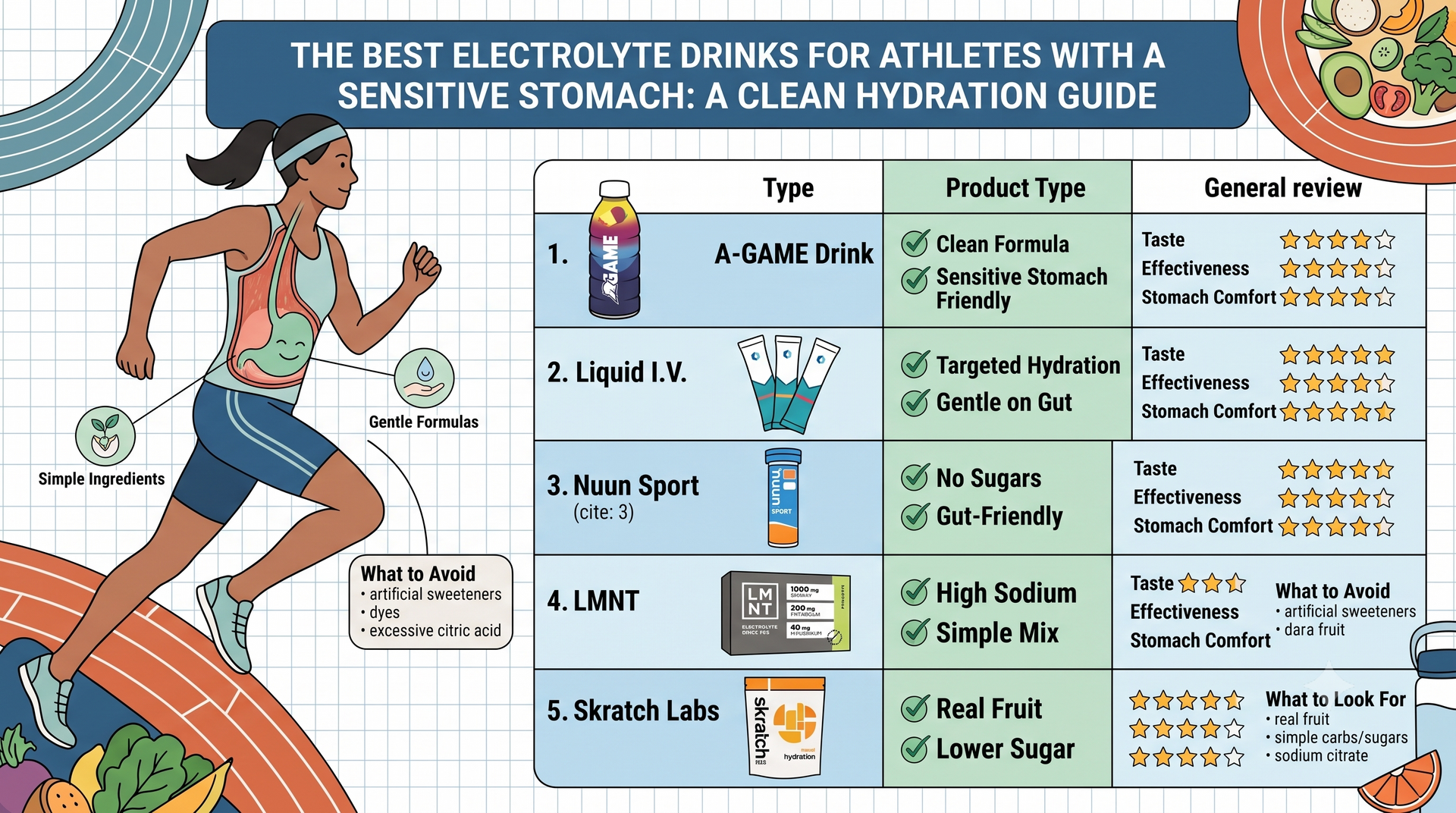
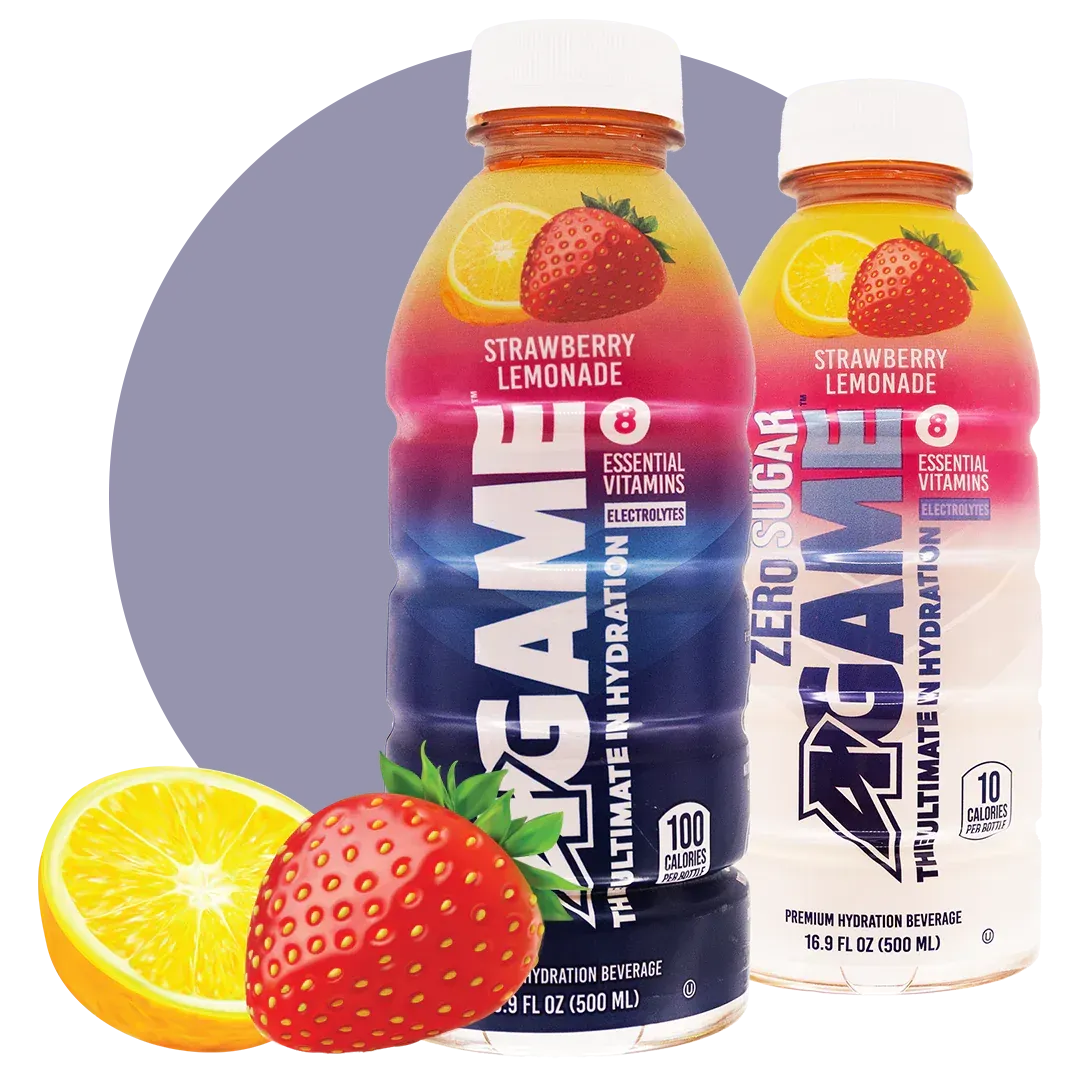
- If “clean ingredients” matters, look for a natural hydration drink with fewer additives and no artificial colors. A-GAME is positioned in that lane, using sea salt and honey, and emphasizing no chemicals or additives.
Sports drink vs electrolyte drink: what is the difference?
People use the terms interchangeably, but they are not the same.
A sports drink is usually “hydration plus fuel”
A traditional sports drink is designed to do two jobs:
- Replace fluid and electrolytes (especially sodium).
- Provide carbohydrates that your body can use during sustained work.
For intense exercise lasting longer than one hour, sports nutrition guidance has long recommended carbohydrate intake of 30 to 60 grams per hour, typically delivered through a 4% to 8% carbohydrate drink.
That is why classic sports drinks tend to contain noticeable sugar. Example: a typical 12-oz serving of original Gatorade is commonly listed as having around 21g of sugar and about 160mg sodium.
An electrolyte drink is usually “hydration without fuel.”
Electrolyte drinks, tablets, or powders focus on minerals (often sodium, potassium, sometimes magnesium) with little to no sugar. They are great when:
- your workout is short,
- you want hydration support without calories,
- you are in heat but not pushing long endurance.
Some electrolyte mixes go the other way and deliver very high sodium levels. For example, Liquid I.V. style packets are often listed around 500mg of sodium per serving, plus sugar.
Bottom line:
- If you need energy during training, choose a sports drink.
- If you mainly need minerals and hydration, choose an electrolyte drink.
What men should actually prioritize (hint: it is not “pink vs blue”)
Hydration needs are not truly gendered, but in practice, many men do share patterns that change the equation:
- Higher sweat rates (often due to larger body size, higher training intensity, or both).
- Higher sodium losses for some athletes, with sweat sodium concentration varying widely from person to person.
- Different goals: staying lean, building muscle, staying sharp for work, and avoiding sleep disruption.
Instead of “best sports drink for men,” consider the best electrolyte strategy for your situation.
The 5 questions that pick the right drink every time
1) How long is your session?
- Under 60 minutes: water is usually fine.
- 60 to 90 minutes: consider electrolytes, and add carbs if intensity is high.
- 90+ minutes: carbs plus sodium matter more.
That 60-minute line is not arbitrary. It aligns with guidance that endurance performance improves when carbs are consumed hourly during longer sessions.
2) How hard are you going?
A slow lift session indoors is different from a hockey game, interval run, or hard cycling in summer heat. The harder you go, the more you benefit from carbs and sodium.
3) Are you a heavy sweater?
If you finish workouts with salt crust on your shirt or your sweat stings your eyes, you are probably losing a lot of sodium. Data from sweat-testing groups show that sodium loss can range from low to extremely high, and many athletes cluster around roughly 950 mg of sodium per liter of sweat, with significant variability.
4) Do you want calories from your drink?
If you are trying to lose fat, liquid calories sneak in fast. If you are training long or trying to maintain weight during volume blocks, carbs in your bottle can be a feature, not a bug.
5) Do you care about ingredients?
If you want a healthy sports drink vibe, you are usually looking for:
- fewer additives,
- no artificial colors,
- sweeteners you tolerate well,
- a formula that still delivers what matters: fluids, sodium, and sometimes carbs.
The main sports drink categories (and who they are for)
1) Classic sports drinks (Gatorade, Powerade)
Best for: long or intense training, hot conditions, team sports, and tournaments.
What you get: carbs plus sodium. A common reference point is about 21g of sugar and 160mg of sodium per 12 oz for original Gatorade.
Tradeoff: great performance utility, but not ideal for casual sipping, and not everyone wants the ingredient list.
2) Zero sugar sports drinks
Best for: short workouts, weight management, people who want flavor and sodium without calories.
Tradeoff: no carbs, so you will need to fuel another way for longer sessions.
3) Electrolyte powders and packets
Best for: customizable hydration, heavy sweaters, travel, heat exposure.
Watch for: sodium level. Some formulas are moderate, some are very high. A packet-style product can hit about 500mg of sodium, which is helpful for heavy sweaters but can be overkill for casual use.
4) Energy drinks disguised as hydration
Best for: occasional performance boost if you tolerate caffeine.
Big warning: caffeine can be helpful, but it also wrecks sleep for many people. The FDA cites 400mg caffeine per day as an amount not generally associated with adverse effects for most adults.
If your “hydration” drink pushes you toward that limit, it is not truly about hydration.
5) Natural hydration drink options
This is where people often look when they type “healthy sports drink” or “sports drink without artificial dyes.” A-GAME positions itself as a premium hydration beverage built around sea salt and honey, and it highlights “no chemicals or additives.” Retail ingredient listings also show formulations that include water, cane sugar, honey, sea salt, potassium citrate, and added vitamins (varies by product and zero sugar version).
Why that matters: if you want carbs for performance but prefer fewer synthetic add-ons, this category can be a middle ground.
Comparison table: best sports drink for men by scenario
30 to 60 min lifting, indoor gym
- Best category: Water or light electrolytes
- What to look for: Sodium if you sweat a lot, otherwise keep it simple
60 to 90 min hard intervals, team sports
- Best category: Sports drink
- What to look for: Sodium plus carbs; aim toward 30 to 60 g carbs per hour if truly intense
90+ min endurance in heat
- Best category: Sports drink plus extra sodium if needed
- What to look for: Carbs per hour, sodium based on sweat loss
Cutting weight or watching sugar
- Best category: Zero sugar electrolyte drink
- What to look for: Enough sodium to support hydration, minimal calories
Sensitive stomach
- Best category: Lower concentration drink
- What to look for: Avoid overly sweet mixes, test in training
Want a natural hydration drink
- Best category: “Clean label” sports drink
- What to look for: No artificial colors, simple sweeteners, real sodium source
Where A-GAME fits (and how to use it)
From a practical training standpoint, that positioning maps to a simple use case:
- If you want carbs plus electrolytes (performance support) but prefer a product that avoids the “artificial everything” vibe.
- If you prioritize a sports drink without artificial dyes, A-GAME is for you.
If you want to see the exact current product options, check out the A-GAME product listing here.
The “junk” conversation: what to avoid without being paranoid
You do not need to treat every ingredient you cannot pronounce as poison. But you also do not need to accept fluorescent colors and long additive lists as the default.
If your goal is a healthy sports drink approach, a reasonable filter is:
- Avoid artificial dyes if unnecessary.
- Avoid excessive sugar if your workout does not justify it.
- Avoid high caffeine if you train later in the day or if you care about sleep.
Caffeine is the one that sneaks up on modern men the most, because it stacks: coffee, pre-workout, energy drink, then “hydration.” The FDA’s general reference point of 400mg per day is a good ceiling to keep in mind.
A simple “choose your drink” checklist (copy and use weekly)
- My session is under 60 minutes and not in extreme heat. I can use water.
- I sweat heavily (salt stains, drenched shirt). I should add electrolytes.
- My session is 60+ minutes and intense. I should consider carbs plus sodium.
- I am cutting weight. I will avoid sugary drinks unless I truly need fuel.
- I train in the evening. I will avoid caffeine-heavy “hydration” drinks.
- I care about ingredients. I will choose a sports drink without artificial dyes and keep the label simple.
FAQ: the questions men actually ask
Do I need a sports drink every workout?
No. If you are training under an hour, especially indoors, water is often enough. Sports drinks shine when duration and sweat loss climb.
Is sugar always bad?
Not in context. Sugar is the primary source of fast carbs. During long or intense work, carbs can support performance, and guidance often targets 30 to 60g of carbs per hour for longer, intense exercise. If you are sipping it at your desk, it is just extra calories.
What is a good electrolyte level?
It depends on sweat loss. Some people lose relatively little sodium, some lose a lot. Sweat sodium losses can vary dramatically across athletes.
That is why “best electrolyte drink for men” is really “best electrolyte drink for your sweat.”
What if I have high blood pressure or kidney issues?
Talk with a clinician before using high sodium electrolyte products regularly. Hydration advice changes with medical context.
The takeaway
A modern sports drink strategy is not about brand loyalty. It is about matching the drink to the job:
- Hydration only for short sessions.
- Electrolytes for heavy sweating.
- Electrolytes plus carbs for long or high-intensity work.
- Choose cleaner ingredients for a sports drink without artificial dyes or unnecessary additives.
A-GAME sits in that “cleaner hydration” lane, emphasizing sea salt, honey, and a no-chemicals or additives message while still functioning as a sports drink option. Check out the flavor list or finding a retailer near you.