

The Official 2026 Guide to Clean Sports Drinks: What Ingredients Matter?
If you’re serious about what goes into your body, you already know not all sports drinks are created equal
In 2026, “clean sports drinks” are everywhere, but the labels are louder than the facts.
This guide breaks down what clean really means, what ingredients actually matter, and how top-selling sports beverages stack up when you look past the hype.
In the U.S., legacy leaders still dominate total sales volume, but the “better-for-you” segment is growing fast, and brands like BODYARMOR and PRIME are now among the top non-aseptic sports drinks by sales in major retail tracking.
That is exactly why ingredient transparency matters more than ever.
Let's define what "clean" really means for sports drinks
“Clean” is not a regulated term, which is why it can feel slippery. There is no single legal definition of “clean label,” and different brands use the word to mean different things.
In practice, clean label usually points to shorter ingredient lists, recognizable ingredients, and fewer artificial additives.
For sports drinks specifically, most shoppers mean some mix of these standards:
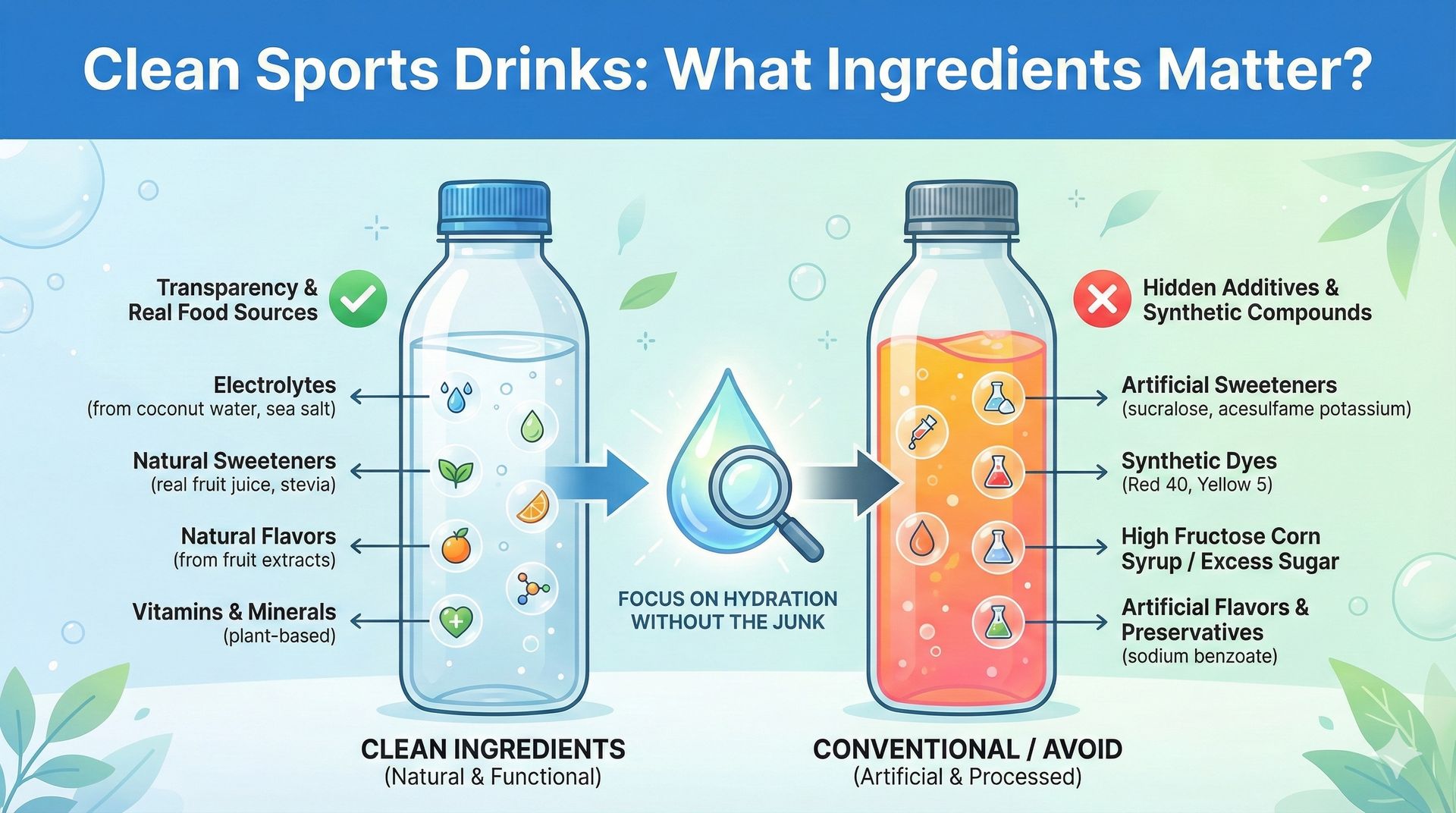
- No artificial sweeteners
- No synthetic dyes or “artificial colors”
- No artificial preservatives
- Real ingredient sourcing where possible (for example, fruit, honey, sea salt)
- A functional electrolyte profile (hydration should be real, not just marketing)
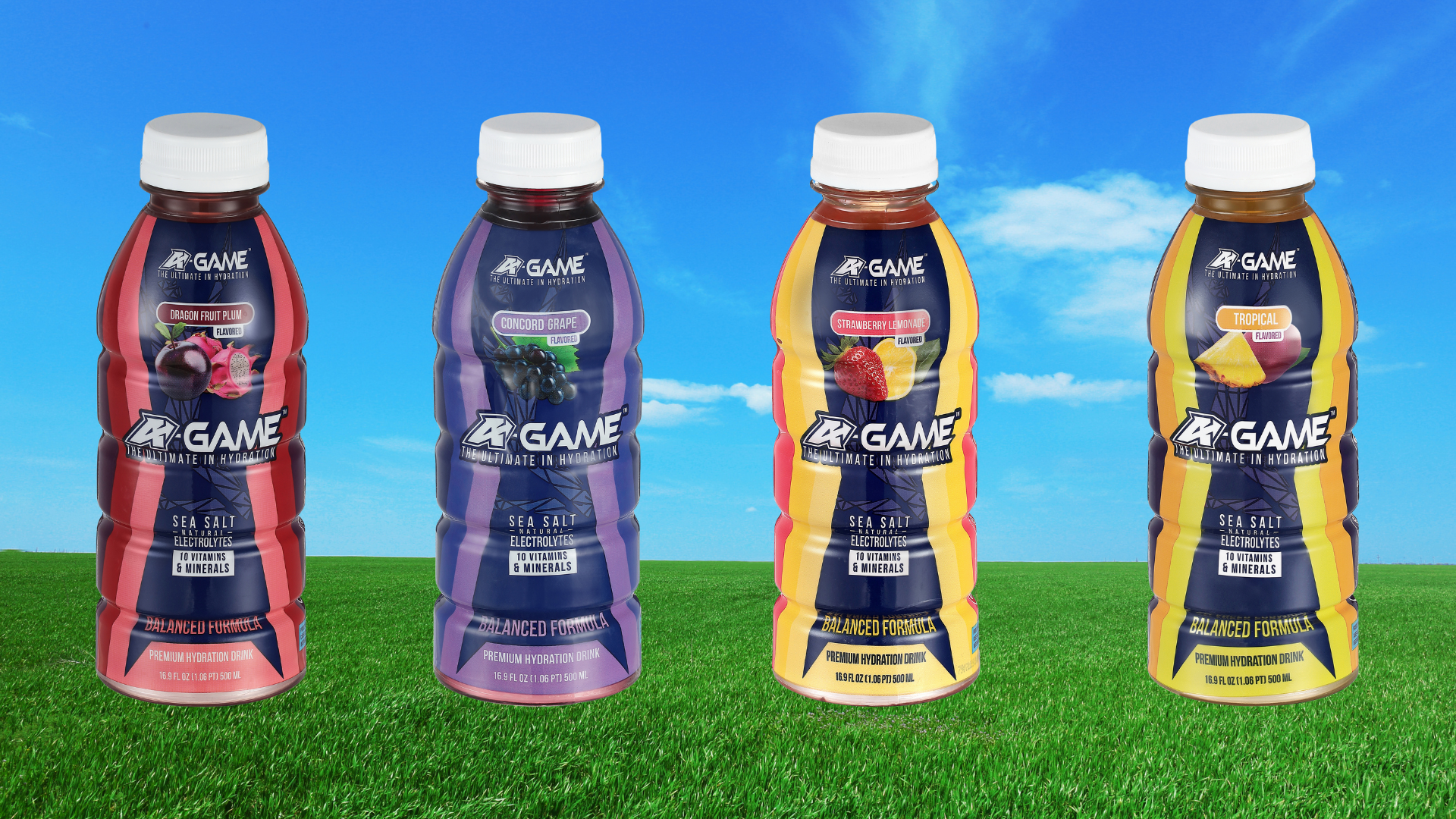
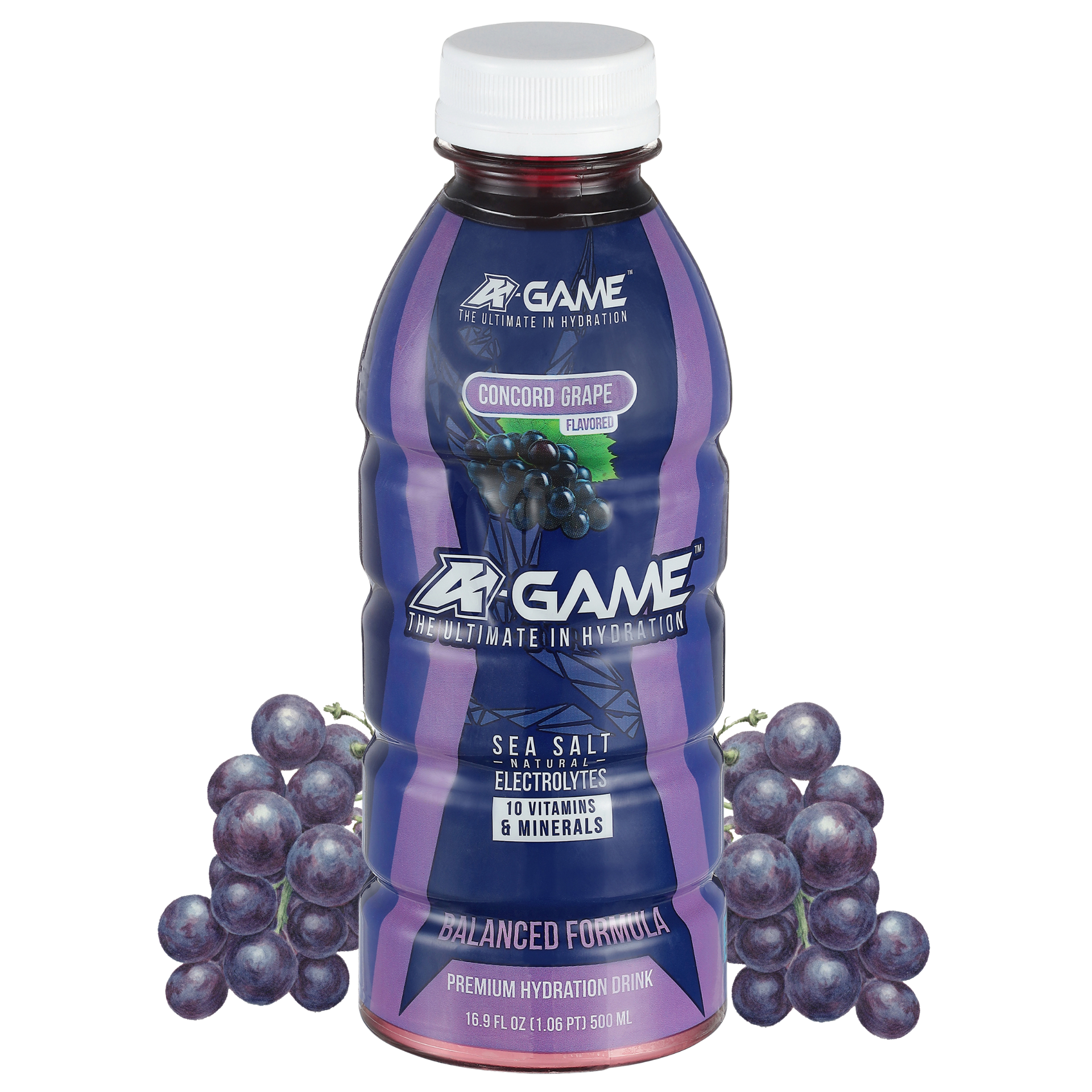
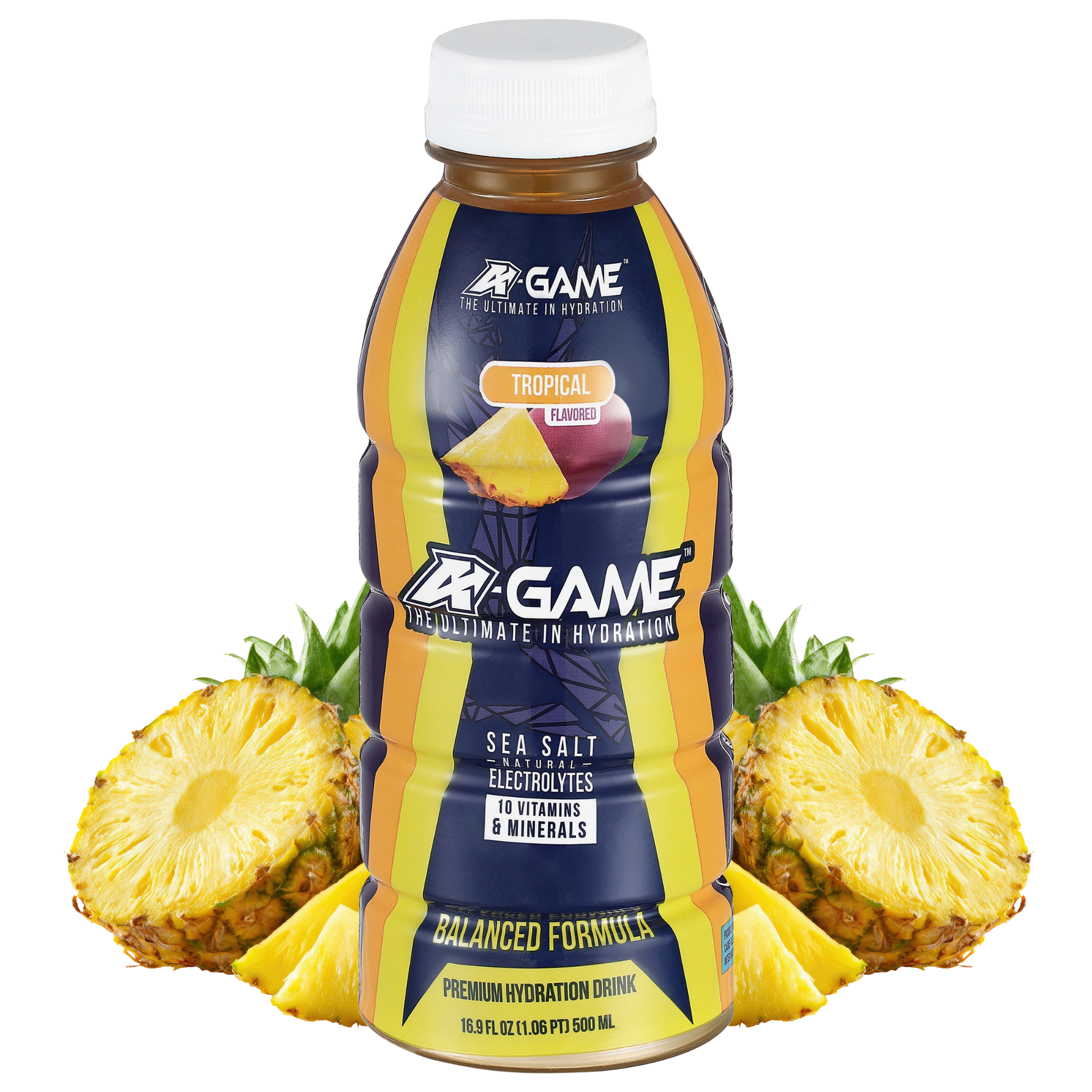
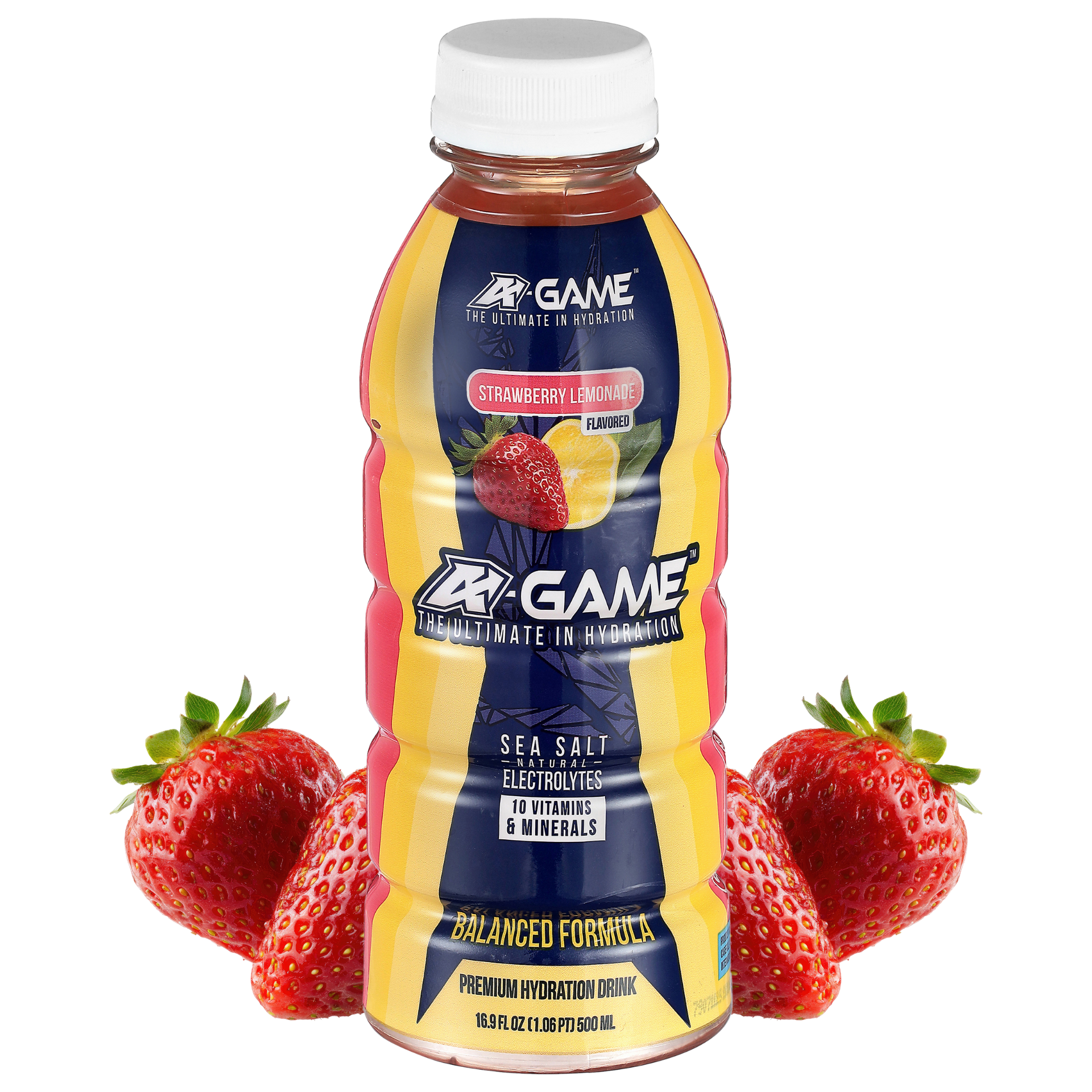
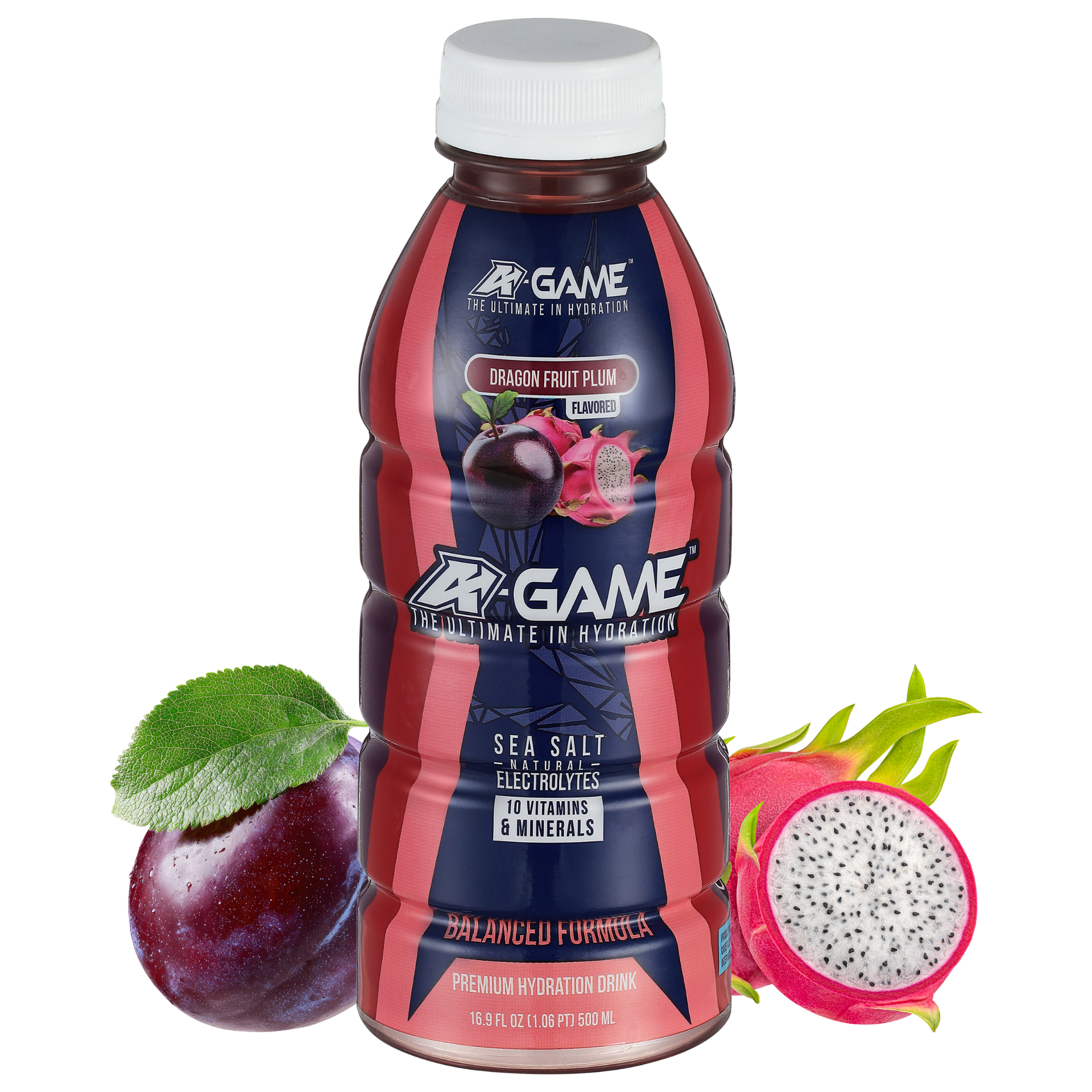
A-GAME’s definition is stricter and simpler: hydration powered by sea salt electrolytes, real ingredients like honey, and added vitamins, without “chemicals or additives.”
The product story emphasizes sea salt for natural electrolytes, honey, and eight essential vitamins (B2, B3, B5, B6, B7, B12, C, E).
Why definitions matter: athletes, active adults, and parents shopping for young athletes are not just buying hydration.
They are buying repeat consumption. If you drink something daily, ingredient quality and transparency matter in a way that “game-day only” products can sometimes ignore.
What should you look for on a sports drink label?
The quickest way to judge a “clean sports drink” is to stop reading the front of the bottle and start reading the ingredient list.
Ingredients many clean-label shoppers avoid
- High fructose corn syrup (common in older legacy formulations)
- Artificial sweeteners (often used in “zero sugar” lines)
- Synthetic colors and dyes (look for “artificial color” language)
- Preservatives you do not recognize or do not want in a daily drink
To keep this practical, remember that even the word “natural” has limits.
The FDA has a longstanding policy (not a formal rule) that “natural” means nothing artificial or synthetic has been added that would not normally be expected to be in the food.
Ingredients that many clean-label shoppers seek out
- Electrolytes with a clear source, especially sodium and potassium
- Real ingredient energy, when carbs are needed (honey, cane sugar, fruit)
- Real fruit or fruit-derived ingredients (or at a minimum a transparent flavor approach)
- Vitamins that match your usage (daily hydration vs endurance sessions)
A clean label checklist you can use in under 15 seconds
- Sweetener check: What is doing the sweetening? Sugar, honey, stevia, sucralose?
- Color check: Is the color coming from fruit/vegetable sources, or “artificial color”?
- Electrolyte check: Do you see sodium and potassium, and do you understand the source?
- Purpose check: Is this a daily hydration drink, or a performance fuel drink?
- Transparency check: Can you explain the ingredient list to a teenager without Googling?
One more important nuance: electrolyte drinks are tools, not magic. Sodium and potassium help regulate fluid balance and muscle and nerve function, but most people do not need frequent electrolyte loading throughout the day.
Clean should also mean “used appropriately.”
Here's how top-selling clean sports beverages compare in 2026
First, a quick reality check on “top selling.” Total sports drink sales are still led by legacy giants, with market data frequently showing Gatorade as the clear leader and BODYARMOR as a major force among the top tier.
In Circana-tracked U.S. retail, the top non-aseptic sports drinks have included Gatorade, BODYARMOR, Powerade, Electrolit, and PRIME.
Now, if we narrow to a clean-label shopping mindset, the comparison is less about “who is #1 overall” and more about “which top sellers best match clean criteria.”
Mobile-friendly comparison chart
Legend
✅ Best fit for clean shoppers
⚠️ Mixed
❌ Usually not aligned
Note: Ingredients vary by flavor and product line. Always verify the specific label you buy.
Clean criteria (what shoppers mean):
Electrolyte source transparency
A-GAME Hydration:
✅ Sea salt emphasized as electrolyte source
BODYARMOR: ⚠️ Electrolyte blend, coconut water concentrate
BioSteel Sports Drink:
✅ Electrolytes listed, includes sea salt
PRIME Hydration: ⚠️ Marketed with electrolytes, coconut water base
Clean criteria (what shoppers mean):
Sweetener approach
A-GAME Hydration:
✅ Honey and cane sugar used (Original)
BODYARMOR:
⚠️ Cane sugar in many SKUs
BioSteel Sports Drink:
✅ Stevia leaf extract (no sugar in many lines)
PRIME Hydration:
❌ Uses sucralose (artificial sweetener)
Clean criteria (what shoppers mean):
Artificial colors and dyes
A-GAME Hydration:
✅ “No artificial colorants” stated in company release
BODYARMOR: ✅ “No artificial sweeteners, flavors, or dyes” stated by brand
BioSteel Sports Drink:
✅ “No artificial flavours/colours” stated for mixes
PRIME Hydration: ⚠️ Varies, but sweetener choice is a key flag for many clean shoppers
Clean criteria (what shoppers mean):
Real ingredient positioning
A-GAME Hydration:
✅ Sea salt + honey + vitamins are core story
BODYARMOR: ✅ Coconut water and vitamins emphasized
BioSteel Sports Drink: ⚠️ Functional formula with natural flavors, stevia
PRIME Hydration:
⚠️ “Function” positioning (BCAAs, antioxidants), but includes artificial sweetener
Clean criteria (what shoppers mean): Vitamins
A-GAME Hydration: ✅ Eight essential vitamins highlighted
BODYARMOR: ✅ Vitamins included (varies by line)
BioSteel Sports Drink:
⚠️ Mixes include some minerals and added components depending on product
PRIME Hydration:
✅ B vitamins marketed
Clean criteria (what shoppers mean):
Overall clean fit for daily use
A-GAME Hydration:
✅ Strong fit if you want real ingredients + transparency
BODYARMOR:
✅ Strong fit for shoppers avoiding artificial dyes and sweeteners
BioSteel Sports Drink:
✅ Strong fit for zero sugar shoppers who tolerate stevia
PRIME Hydration:
⚠️ Popular and top-selling, but not “no artificial sweeteners”
Quick takeaways from the chart
- A-GAME wins on a simple “real ingredients” story: sea salt electrolytes + honey + vitamins, plus explicit “no artificial colorants” language in company communications.
- BODYARMOR is one of the largest mainstream “cleaner” options because it explicitly positions itself as free of artificial sweeteners, flavors, or dyes, and uses coconut water concentrate in many products.
- BioSteel is often a clean-label favorite if you want zero sugar and can tolerate stevia, with clear “no artificial flavours/colours” positioning on certain products.
- PRIME is undeniably top-selling and culturally huge, but if your definition of clean includes no artificial sweeteners, sucralose is a deal-breaker.
Why do these ingredients matter for your performance?
A clean sports drink is not just “free from junk.”
It should still do the job: support hydration, muscle function, and recovery when your activity level demands it.
Sea salt electrolytes (especially sodium and chloride)
Electrolytes are minerals that carry an electric charge and help regulate fluid balance, plus nerve and muscle function.
Sodium is the big one for sweat replacement. In vigorous exercise, heavy sweaters can lose hundreds of milligrams of sodium per hour.
That's why electrolyte hydration is more important in heat, long sessions, doubleheaders, or tournaments.
Sports medicine guidance emphasizes preventing excessive dehydration and managing electrolyte changes, especially for longer or more intense efforts.
This is also why “electrolytes” on the front label alone is not sufficient.
You want a product that clearly states what is inside and why.
Real fruit and honey (carbs that actually do something)
Carbohydrates are performance fuel, not a moral failing. If you are training hard, playing multiple games, or doing long sessions, carbs help sustain effort and support recovery.
Sports beverage guidance often specifies carbohydrate ranges for prolonged exercise, which is why many athletic drinks include some carbs rather than none.
Honey, in particular, is gaining attention because it provides carbohydrates and naturally occurring compounds.
A systematic review on honey supplementation and exercise summarizes evidence across performance and recovery contexts.
More recent research also examines honey-sweetened beverages and their performance-related effects.
Translation to real life:
- If you are doing short, easy workouts, you might not need carbs in your bottle.
- If you are doing long, hot, or intense sessions, carbs can help, and clean carbs matter.
Vitamins (useful, but not a substitute for nutrition)
Vitamins can support overall wellness, but they are not a substitute for sleep, quality food, or a balanced diet.
Still, for many shoppers, vitamins signal intentional formulation, especially when paired with an ingredient list that avoids common fillers.
Brands like A-GAME and BODYARMOR both emphasize vitamins in their hydration positioning.
The smart way to think about vitamins in sports drinks:
- Helpful for a daily hydration routine if the rest of the label is clean
- Not a reason to ignore sugar load, artificial sweeteners, or unclear additives
How does A-GAME raise the bar for clean hydration?
A-GAME’s strongest differentiator is that it does not ask you to choose between “functional hydration” and “clean ingredients.”
It is built around sea salt electrolytes and honey, with added vitamins, and emphasizes no artificial colorants and a cleaner ingredient approach.
1) A clean ingredient story that matches what shoppers mean by “clean”
Clean-label shoppers usually want two things at the same time:
- Ingredients they recognize
- A product that still works for real training and real life
2) Credibility signals that reduce buyer hesitation
A-GAME has a credibility layer that many newer hydration brands aspire to: public endorsements and partnerships, including a company-announced endorsement from Gary Brecka, along with other athlete and founder credibility signals mentioned in company communications.
3) A positioning fit for the way people actually use sports drinks in 2026
The sports drink category now serves multiple use cases:
- daily hydration for active adults
- youth sports and tournaments
- gym and training
- heat exposure and heavy sweating days
This is why the “clean sports drinks” question is so common now. People no longer want a one-off game-day product. They want a drink they feel good about buying weekly.
A-GAME explicitly targets “any sport, any fit, any occasion,” which aligns with how consumers actually shop for electrolyte hydration today.
Ready to try A-GAME? Shop online or use our store locator to find A-GAME near you today.